Cattai National Park, 27th December 2014, VKFF-092

Cattai NP

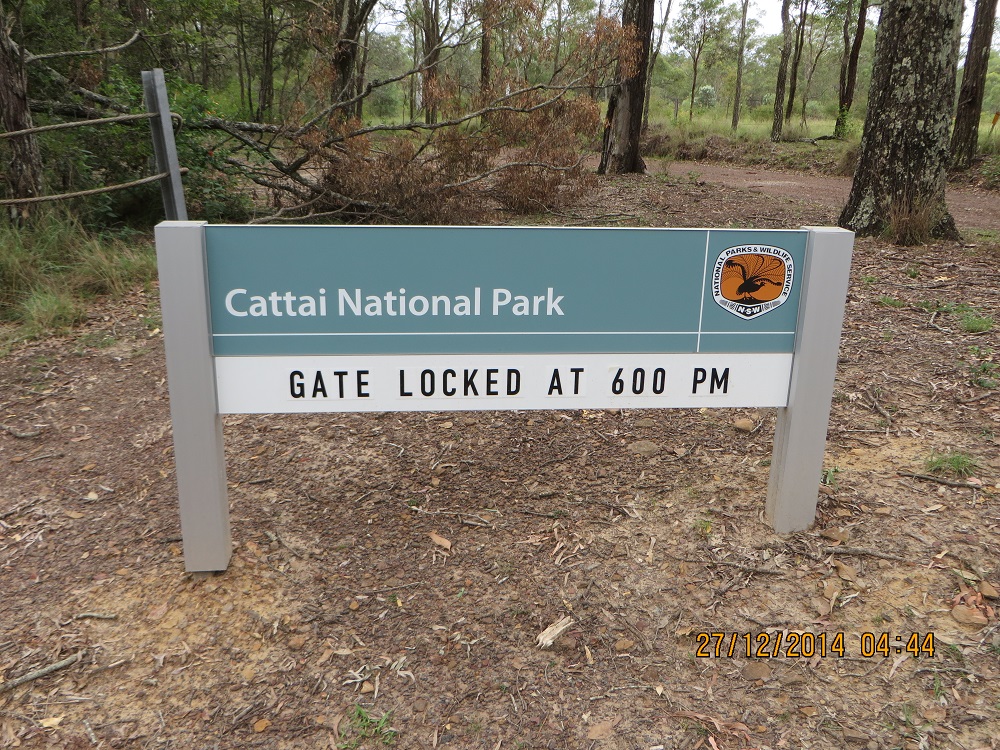
Cattai National Park is in two sections. We went to the day use area on the Clarence Reach section on the Hawksbury River.

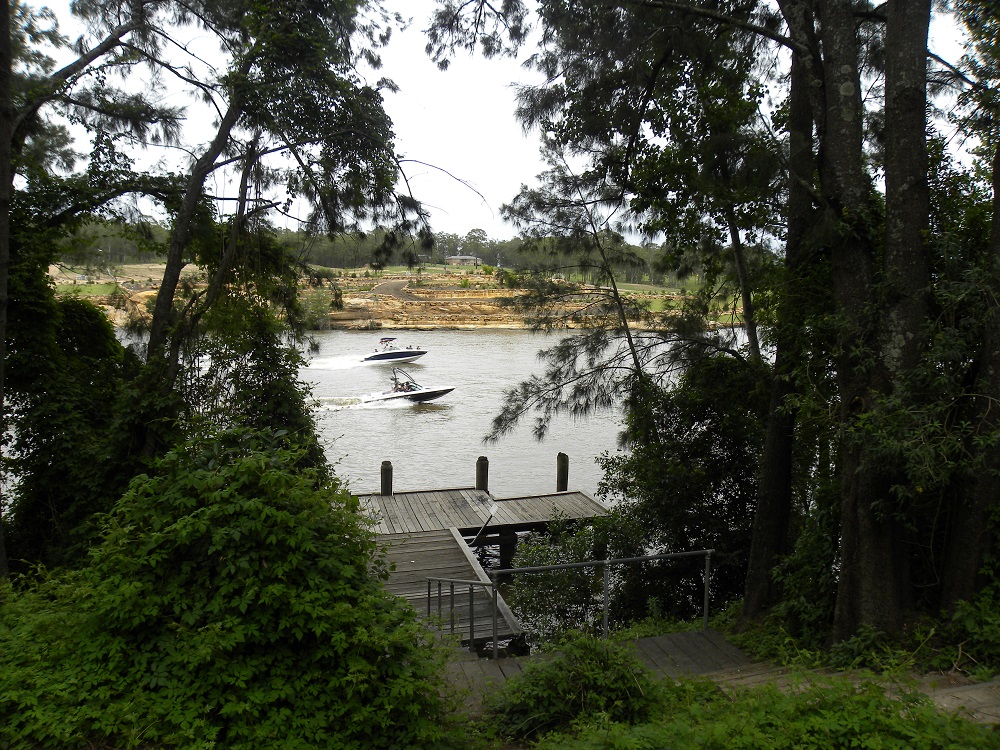
The Hawksbury River from Cattai NP

The Hawksbury River from Cattai NP

This section of the Park is not far from the historic Pitt Town. The camping ground, in the same general area, was very popular and busy. But I found a spot away from the crowds where they would not hear my voice and enjoyed a great time at this Park.

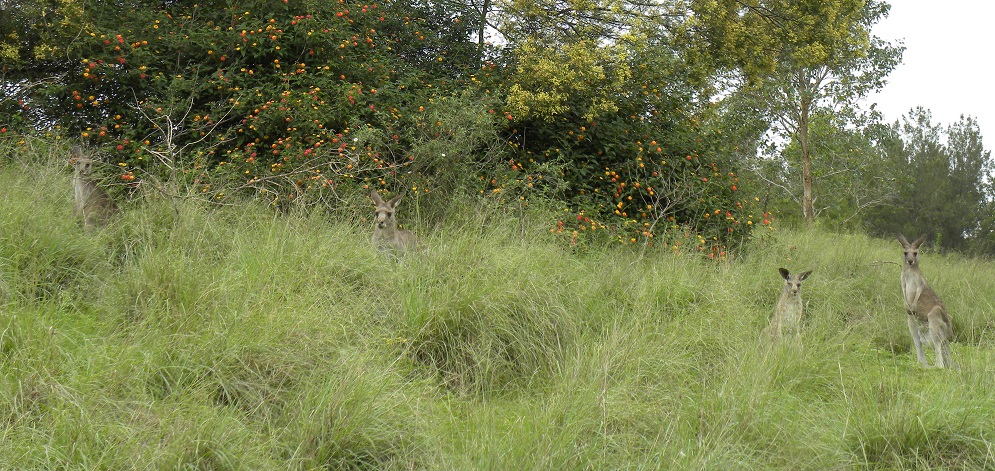
My fan club at Cattai NP JCD photo

My fan club at Cattai NP JCD photo click to expand

I did not have a great deal of time and I was fortunate to have 11 contacts, thus qualifying the park for the VKFF award.

I had contacts with the following stations: 03:47 UTC, VK3ANL/P3, Nick in Churchill NP; VK2UH, Andrew; VK3MRG, Marshall, VK3FQSO, Amanda; VK2AMF, Mike; VK2UNC, Owen; VK4GSF, George at Toowoomba; VK2IO/P, Gerard at Gosford; VK3YSP, Joe, at Burrowa-Pine Mountain NP 5 and 7 and 5 and 8, and Joe called me: VK3FOWL, Julie also at Burrowa-Pine Mountain NP: and VK1DI/P2, Ian on VK2/SM-090, Cathcart Trig, worth six points. Thanks to Andrew, VK2UH, for spotting me.

I reckon 11 contacts in just over 20 minutes salvaged the day! Thanks to all of the stations who gave me a call. It is always greatly appreciated.

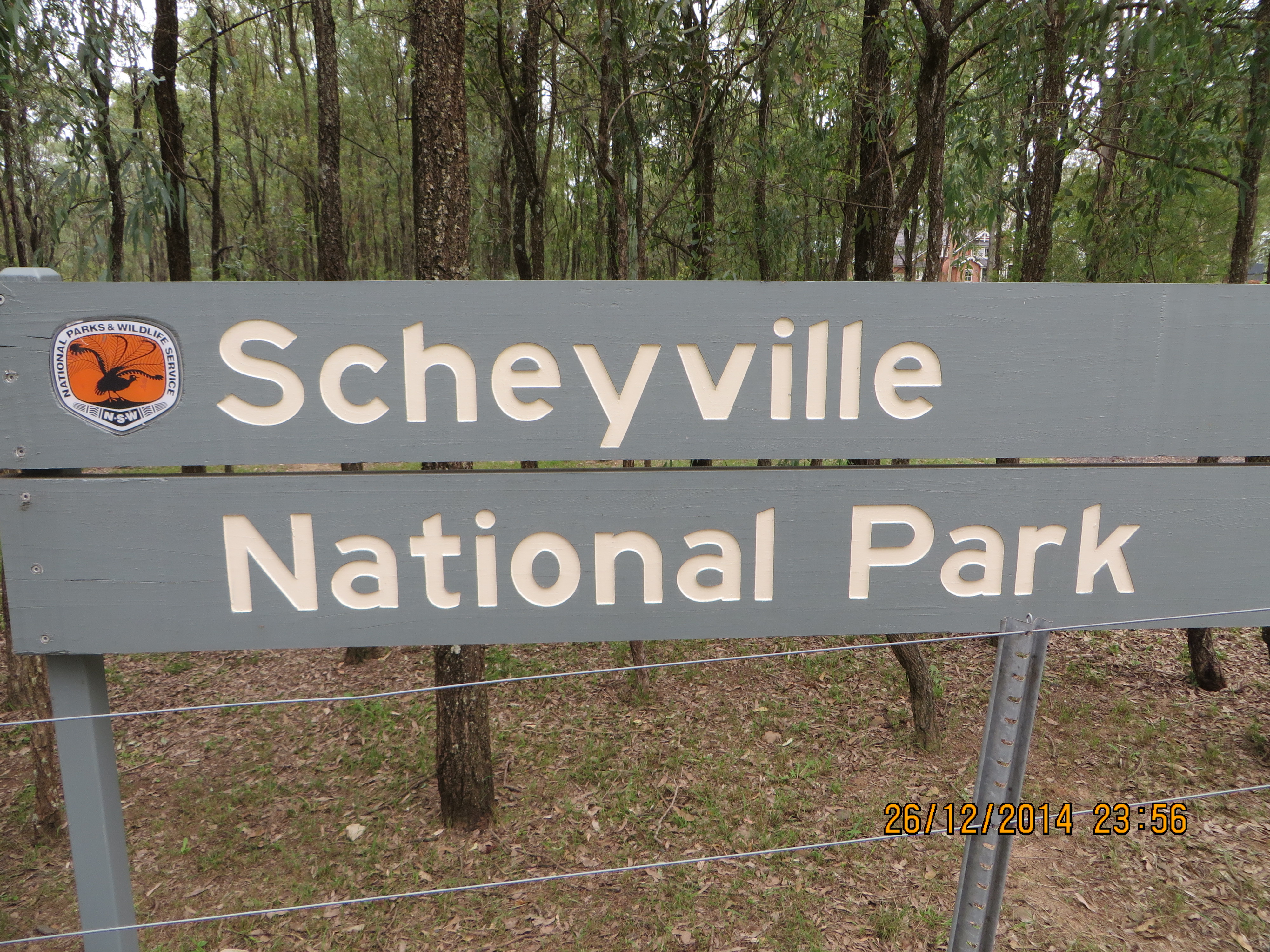
Scheyville National Park, 27th December 2014, VKFF-444

IMG_0372
Scheyville (pronounced Sky-ville) National Park is 920 hectares and located about five kilometres east of Windsor and North- West of Sydney.

It has both geological significance being the largest single remnant of Cumberland Plain vegetation on shale soil. It has grey box, forest red gums and narrow-leafed ironbark trees. It includes the Longneck Lagoon where we went for a walk. This was a great place for birds and bird-song.

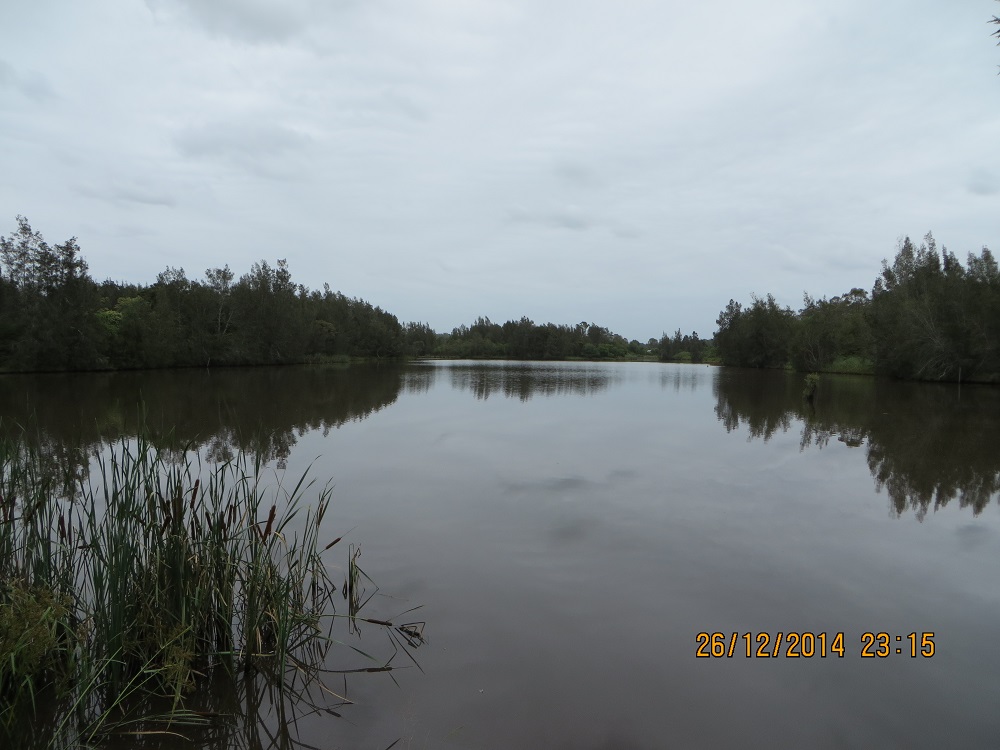
Longneck Lagoon Scheyville National Park

Longneck Lagoon Scheyville National Park

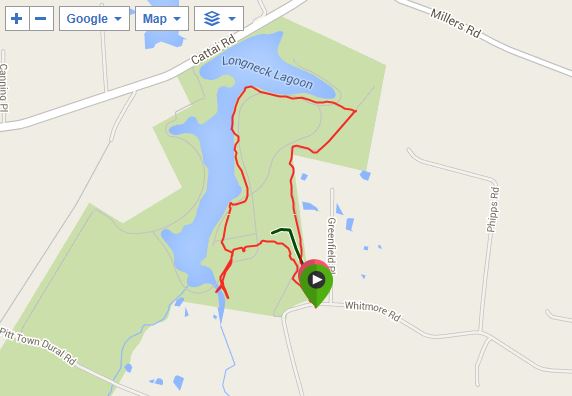
Walk at Longneck Lagoon

Walk at Longneck Lagoon

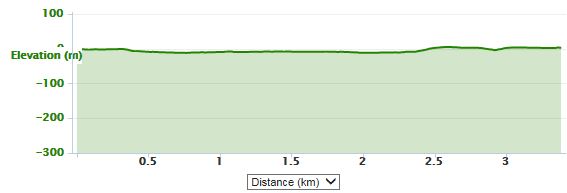
Elevation - Longneck Lagoon - a small rise at the end was challenging for Grandchildren

Elevation – Longneck Lagoon – a small rise at the end was challenging for Grandchildren

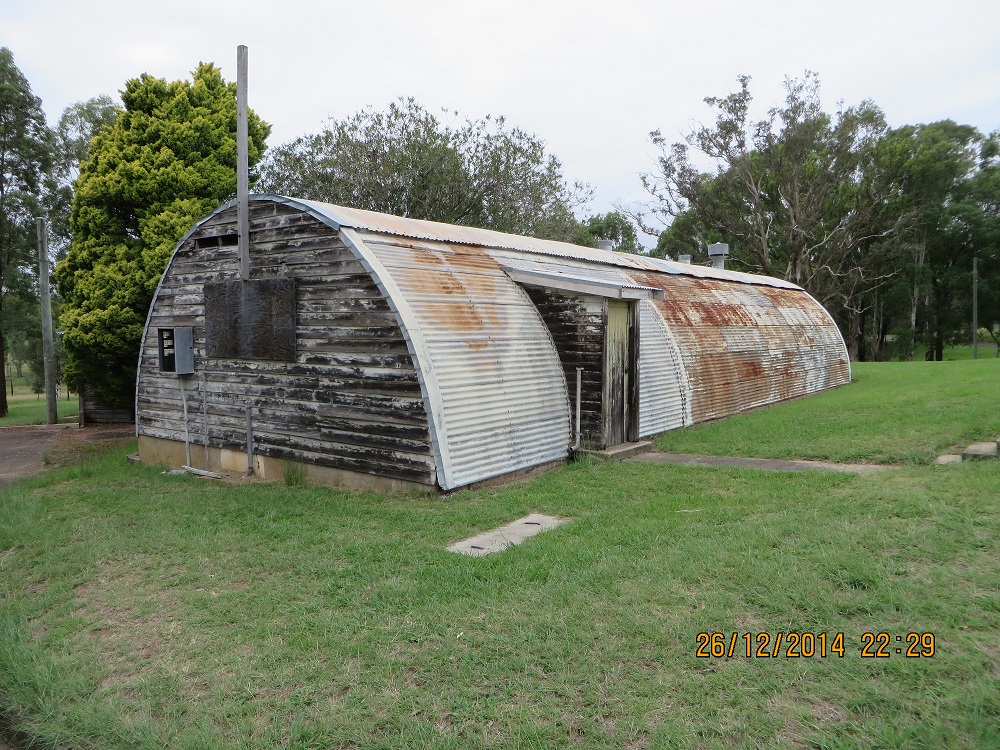
On a historical view the Park includes relics of military buildings dating from the 1920s to the 1960s. And more recently Scheyville was used as a migrant hostel.

Historic Hut Scheyville National Park

Historic Hut Scheyville National Park

These few notes were take from the excellent NSW National Parks and Wildlife Service brochure. We obtained our brochure from the information centre at the Cumberland North Area Office of the service located near the 1929 Georgian Revival administration office within the Park.

I set up my station on an old building formation about 400 metres away from the administration building. I had great expectations of getting at least 10 contacts. After all is was Saturday! I checked out the noise levels on the car transceiver (Yaesu 857D).  It was noisy in an RF sense, and, later, I could even hear a nearby landowner at work with a lawn-mower. The noise peaked on 7.100 Mhz. Nevertheless I thought is was manageable and I decided to stay. I set the power level to 10 watts. I called (on 7.110 Mhz) VK3VTH/P3, Tony (01:50 UTC) who was in the Organ Pipes National Park. Signals varied but eventually we made a good contact after I wound my power up to 30 watts. I gave Tony 5 and 9 and he gave me 5 and 3. He was using a 100 watt transceiver. He was pleased with a new Park for the VKFF award.

I then heard Nick, VK3ANL/P3, on 7.105 Mhz in Churchill National Park. I first called Nick at 01:48 UTC and the finish time in my log is 01:56, but it was hard going. I gave Nick 5 and 2 and I received 4 and 6.

I heard no other stations well enough for a contact. I did hear Joe, VK3YSP/P3, but in and out of the noise. He was speaking with Peter, VK3PF/M who was on his way to a summit. My aim was to have a contact with Joe at Burrowa-Pine Mountain National Park. (I have four Parks remaining for the 45 needed for the KRMNPA, including Burrowa-Pine Mountain NP). But I heard Joe say he was two hours from his destination. I decided I would move to another Park – hopefully with less noise and in time to work Joe and Julie. Cattai National Park, VKFF-092 was set as the new destination in the GPS.

I am sure it would be possible to find an RF quieter location. Maybe the locals know the best spot. But given this was ‘taking’ a few hours off from family time I am pleased to have had two contacts.

Greater Bendigo National Park, VKFF-623, 21st December 2014

I first visited the Greater Bendigo National Park, VKFF-623, on 2nd January 2014. On that occasion I visited Shadbolt which is in the North-Westerly corner of the Park. I made 13 contacts. Here is the link to my first activation of this Park.

Greater Bendigo National Park, 2nd January 2014

After promising an activation of this park I decided to visit the One Tree Hill Lookout on Sunday evening 2st December. I enjoyed six great contacts all on 40 metres.

And on Monday morning, before UTC rollover I went back to the park for a third visit, this time taking a track into the Park from the corner of Wards and Wallanjoe Roads. I worked hard for nine contacts! I guess most amateurs are back to work for a few days? I also tried 20 metres un-successfully although I did try to make contact with W1AW/KH6, which was loud. I couldn’t quite make it. I am sure he knew I was there! I now have 28 contacts from this Park, not the 44 I was hoping for more. Oh well! I will come back, I hope!

As usual we had with us our copy of the Parks Victoria Visitor Guide. This is an excellent  four A4 page document with a map on the middle double page. On the front page there is a section entitled Enjoying the Park: this is then followed by five headings (in bold); Picnicking, Camping, Walking, riding and driving, Dog-walking (in One Tree Hill Section of the Park) and Horse Riding (in two designated sections). Other recreational activities are then summarised in the last paragraph: nature study, photography, orienteering and prospecting.

I wonder when we might see amateur radio added to the last section?

Mt Moliagul, SOTA summit VK3/VN-024, 21st December 2014

After moving on from the Little Desert National Park, lunch in Horsham and a stop in St Arnaud we decided to re-visit Mt Moliagul. I last activated this summit on January 2014 on a cooler day (11 contacts).

Here is the link to my first visit to Mt Moliagul. https://vk5bje.com/2014/01/02/sota-mt-moliagul-vk3vn-024/

This time it was warm and cloud was starting to form. On the summit it was hot with barely a breath of wind. My xyl drove the 4×4 to the summit to finish her shift at the wheel.

I then followed the same procedure as I did on my first activation of the summit: I went for a walk down to the tree line, well outside the activation zone while looking around and checking whether a spot in the shade might be possible. I could find no shade in the activation zone. I carried my gear to an old notice board describing what bush-land volunteers had achieved. It was in poor shape but good enough to support my squid pole.

It didn’t take long for people to find me and VK5PAS, Paul, kindly spotted me.

I enjoyed 16 contacts including two s2s qso’s. I thought this was pretty good for an unplanned activation! I was delighted to have contacts with VK3YY, Glenn and VK3KAB, Kevin, who were at Mount Samaria. There are no activator points for me as this is my second activation within a year, but I am glad to give those listed below a chance for Mount Moliagul.

Activator Log

Time Call Band Mode Notes
04:21z VK3YY/P3 7MHz SSB VK3 VE 157
04:23z VK3KAB/P3 7MHz SSB VK3 VE-157
04:30z VK5GY 7MHz SSB Messent CP
04:35z VK3ARR 7MHz SSB Andrew
04:36z VK5PAS 7MHz SSB Paul
04:37z VK3ANL 7MHz SSB Nick
04:38z VK3FPSR 7MHz SSB Peter
04:41z VK3TCX 7MHz SSB Ian
04:42z VK3AV 7MHz SSB Bernard
04:44z VK2EXA 7MHz SSB Peter
04:45z VK3PF 7MHz SSB Peter
04:47z VK3EK 7MHz SSB Rob
04:48z VK3LED 7MHz SSB Col, Maiden Gully
04:50z VK2UH 7MHz SSB Andrew
04:53z VK5WG 7MHz SSB Nev
04:54z VK3DAC 7MHz SSB Fred

Little Desert National Park, VKFF-291, 21st December 2014

On my way from Adelaide to Bendigo I couldn’t resist the temptation to re-visit the Little Desert National Park in the Wimmera Region of Victoria. I last visited this Park in September 2013 and logged 30 contacts over the visit from two activations in two different parts of the Park.

Here is the link to my first activation of this Park.

Little Desert National Park 7th September 2013, VKFF – 291

I went back to Horseshoe Bend. I was on the air at 21:30 hours (20/12/2014) well before UTC rollover. After 31 contacts on 40 metres I moved to 20 metres (14.315) but could not get a contact. I had a listen around the band and there were a few strong signals and a WIA broadcast signal from NSW. I now have 61 contacts from this Park qualifying it for the WWFF award system. This is my first Park with over 44 contacts. Thank you to all the amateurs who made this possible.

All contacts for this Park can be seen at my log page at HRD.log and have been up-loaded to LOTW as well.

Mentoring In Amateur Radio

I have been reflecting on this topic for some time. Recently I gave two papers at the ‘Welcome To Amateur Radio Symposium’ held on the 3rd November 2014. This event was sponsored by the Adelaide Hills Amateur Radio Society Inc., and was organised by VK5PAS, Paul, and has been described elsewhere.

https://vk5pas.wordpress.com/2014/11/24/2014-welcome-to-amateur-radio-symposium/

http://www.ahars.com.au/welcome-to-amateur-radio-symposium-16/

Mentoring has been part of amateur radio since its beginning. The Macquarie Dictionary (Australian) provides two definitions on the word mentor. The first is a ‘wise and trusted counsellor’ and Mentor (capitalised M) ‘the friend to whom Odysseus, when departing for Troy, gave the charge of his household’. Both of these definitions suggest that a mentor is a very special person, with whom the person being mentored, has a unique and trusting relationship’. The only aspect of the Dictionary definition which encompasses the idea of training, is an addition to the first definition where a mentor is ‘someone who trains dogs for racing’.

A common sense view of mentoring

It is clear that the word ‘mentor’ has a wider meaning in every day language. It occurs not infrequently in management literature, in the press and as a synonym for a special type of supervision, usually in one-to-one relationships designed to encourage  reflective behaviour in trainee and newly graduated human service professionals amongst others. Amateurs mentioned in my blog, now deceased, were some of my early mentors, see About.
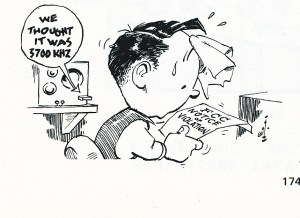
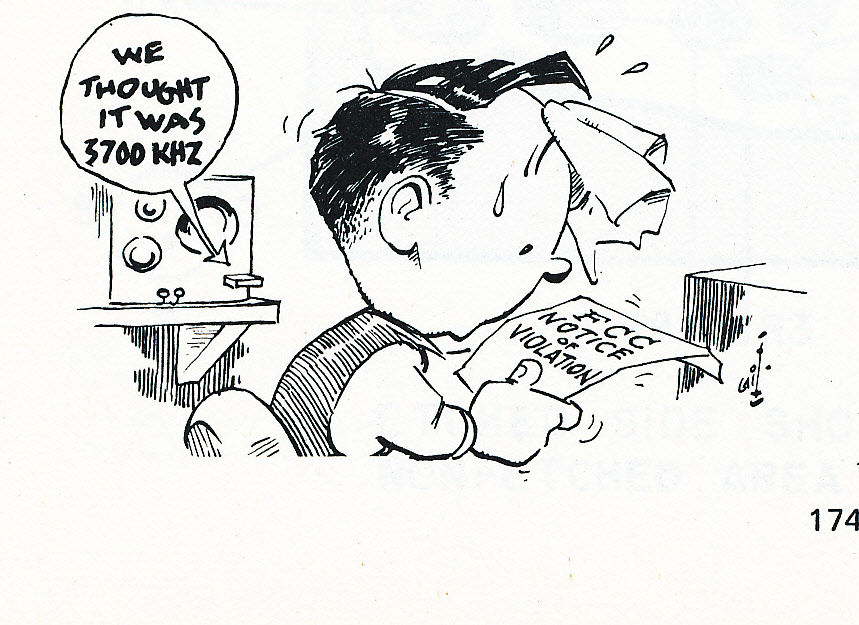
This chap needs a mentor!

This chap needs a mentor!

Picture taken from George Grammer, 1971, Understanding Amateur Radio, ARRL, Newington, CT. My caption.

The US word ‘Elmer’, used in amateur radio, captures some of this special quality. I first came across the word Elmer in ARRL publications from the late 1970s, aimed at beginners and novices. ‘The term ‘Elmer’ , meaning someone who provides guidance and assistance to would-be-hams first appeared in QST in March 1971 ‘How’s DX’ column by Rod Newkirk, W9BRD (now also VA3ZBB).  Newkirk called them the ‘unsung fathers of Amateur Radio’… ‘To frequently one hears a sad story in this little nutshell: “Oh, I almost got a ticket, too, but Elmer, W9XYZ, moved away and I kind of lost interest”‘. See ARRL http://www.arrl.org/elmer-award (accessed 19th December 2014). Another mention of the word ‘elmer’ can be found at the Straight Key Century Club

http://www.skccgroup.com/member_services/morse_elmers/ (accessed 19th December 2014).

I am not  recommending the use of the US term in Australia even though it was mentioned by one of the presenters at the Symposium. I think we should develop our own traditions! Perhaps we can all be mentors? Of course you can be a mentor and be mentored.

None of us should be too proud to acknowledge out debt to other amateurs. Barry, VK5BW, assisted me with my oscillosope images used in my first presentation and more recently with some repairs to my HF Linear. While I diagnosed the problem I wasn’t prepared to take the soldering iron to the job! Over the last few years some amateurs in the AHARS and elsewhere have approached me to assist in programming their 2m/70cm FM/Dstar radios. I am always pleased to assist. As I was preparing some notes for this post last evening my mobile rang and a member of AHARS was seeking advice on his mobile installation and DStar programming. I am not too sure how I developed this reputation but I have talked a few few though the ‘mysteries’ of Dstar on air and in person.

So getting back to the Symposium, what did I speak about? The first paper was called Making a Successful (and legal) QSO.  Here I dealt with call signs, speaking clearly and the use of phonetics, frequency of identification, on-air manners and the nature and content of a QSO. My second paper was called Simple and Effective Antennas for Amateur Radio Operators.  After providing a definition of an antenna I covered resonant and non-resonant antennas, balanced versus unbalanced antennas, directivity, polarisation, antenna couplers and basic constructional techniques. Both discussions were aimed at newcomers. Finally, it was interesting to note that the Symposium was attended by a number of new amateurs, at least one aspiring future amateur I spoke with, and surprisingly quite a few ‘senior’ amateurs, which perhaps illustrates my point that we can be both mentors and be mentored.

Spring Gully Conservation Park, 2nd October 2014: a mini activation

Spring Gully CP Look Out: off Sawmill Road JCD photo

Spring Gully CP Look Out: off Sawmill Road JCD photo

I went back to Spring Gully Conservation Park for a third activation this morning. The real purpose was to try out a home brew three band end-fed antenna. The antenna is currently designed for 30, 20 and 17 metres, but I will probably extend it to 40m when I get home. One design fault with the antenna is the running insulator which is in the 20 metre section does not allow for centre mounting. I will move it to the 30m section which will ensure the antenna is mounted at the top of the squid pole in the centre and not off-centre in the 20 metre section. The current arrangement means that too much of the 30m section hangs too low which reduces efficiency. Andrew, VK1NAM, inspired me to build this by his excellent article on a half-wave end-fed system he built.

I tried out the 30m antenna. I had qso’s on 10:115 ssb with VK2AXB, Grant at Orange 5 and 8 and 5 and 2; I could hear VK4NZ, Jim in Mackay, Qld, 5 and 1, but he could not hear my signal; VK4JWT, John in Brisbane was 5 and 6 and he gave me 4 and 1; VK3AAU, David in Warragul very kindly drove to a high point to work me (away from the noise): he was 5 and 8 and gave me 4 and 7 and finally, VK3SQ, Geoff, at Beechworth 5 and 8 and 5 and 6. I used my FT817 at five watts and the SOTA tuner which will handle six watts (parallel-tuned) for the lower bands. I did not post an alert in case all went pear-shaped. It didn’t and the antenna could be useful on a summit.

Later in the day we held a mini-hamfest in Clare. I had already arranged to meet VK5KC, David, who, with his wife, came to Clare for a family weekend. Later in the day I received a call from VK5PAS, Paul, who was driving towards Jamestown to activate some summits and parks and indicated he would activate Spring Gully Conservation Park as he was passing through Clare. Earlier in the morning I had met with Ian, VK5CZ, tractor mobile, who was working. And later, with the aid of the Spencer Gulf Repeater (146.700 – 600 KHz) and 146.500, we arranged to catch up at the end of the day. The meeting place was in the Clare Caravan Park and a picture was taken, which is highly likely to appear on Paul’s Blog.

Sadly our visit to the Clare Valley will come to an end tomorrow as we turn around and drive back to the Adelaide Hills and home. I have had a great time climbing Mount Bryan, visiting Parks, socialising and playing radio.

Red Banks Conservation Park, 1st October 2014

Red Banks Conservation Park was proclaimed a Park in 2002. Previously is was owned by the Council and used as a recreation area, often inappropriately for off-roading. It is a stunning area. There is a variety of vegetation from scrub to large trees, for example, river red gums, two creeks dissecting the Park with permanent water and massive red-cliffs. There is a camping area with ten camp-sites marked and a day use area separate from the camp-ground. We travelled to the day use area.

I set up my FT897 on five watts and engaged in 11 contacts with locals on 40 metres before moving to 20 metres. I increased the transmit power to 40 watts and easily worked  Paul, EA5/GM0OPK. I used my large LIfePO4 battery and linked dipole.

Red Banks Conservation Park. Using the Yaesu 897. JCD photo

Red Banks Conservation Park. Using the Yaesu 897.
JCD photo

I enjoyed the following contacts on 40 metres: VK5GJ, Greg at 03:36; VK3VBI, Ron; VK3FKJC, Kevin; VK5NQP, David; VK5LY, Larry; VK5WG, Nev; VK5LI/M, Craig; VK5NFB, Don; VK5LY, Larry for a longer qso; VK5BAR, Adelaide Hills Amateur Radio Society, Inc., David, VK5KC operator and then I migrated to 20 and at 05:34, had a contact with Paul, EA5/GM0OPK, 30k North of Valencia. I gave Paul 5 and 7 and he gave me 5 and 4. I tried to have a qso with Enrico, I6EH, but the E in my call-sign proved too big a stumbling block. I gave him 5 and 8 and he gave me 5 and 4. I will not count the contact.

Red cliffs at Redbanks Conservation Park

Red cliffs at Red Banks Conservation Park

The view from my operating position at Redbanks CP

The view from my operating position at Red Banks CP

Mokota Conservation Park, 1st October 2014

Mokota Conservation Park: notice rocky spine! JCD photo

Mokota Conservation Park: notice rocky spine!
JCD photo

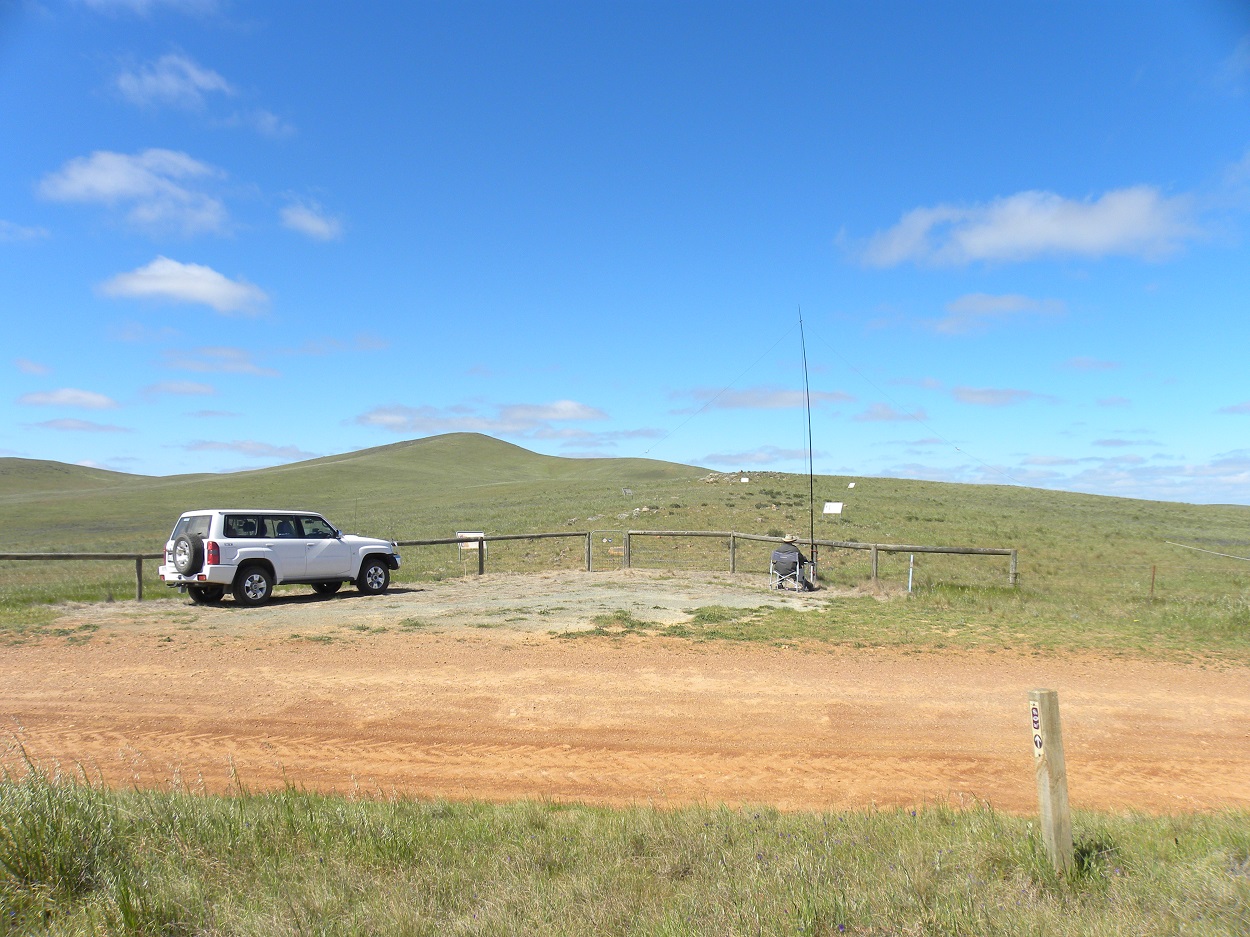
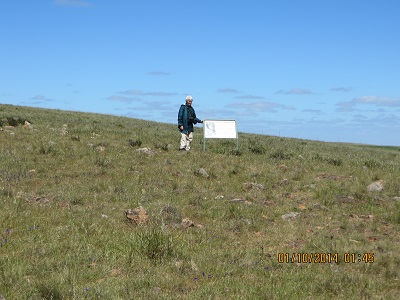
Mokota Conservation Park was proclaimed in 2002. The land, 455 hectares, was purchased by the State and Federal Governments to conserve native grassland. The park is treeless. On the highest section small rough hewn rocks emerge from the ground giving the appearance of a backbone running up the hill. Interpretative signs are placed strategically to assist visitors. See the photo below.

I set up my station near the entrance using the park fence to support my squid pole and linked dipole. The radio I used was the Ten Tec Argonaut, Model VI, with the power set at five watts. I was very pleased to work two SOTA stations, including VK1ATP/P7, Paul, in Tasmania and Ian, VK1DI/P1, on Black Mountain in Canberra.

The following contacts were had on 7.100: VK1DI/P1, Ian, on VK1/AC-042 at 00:27; then 7.090, VK1ATP/P7, Paul on VK7/EC-045; 7.100, VK5WG, Nev; VK5FPAC, Bob; VK5AKM, Keith; VK5LDM, Dennis; VK5AKM, Keith, then on 14.150, VK2AXM/M2, Max travelling to Newcastle. Eight contacts – and I called on 20 metres for a few minutes before Max called me and we enjoyed a 20 minute qso before conditions deteriorated.

Mokota CP: no trees just grassland

Mokota CP: no trees just grassland

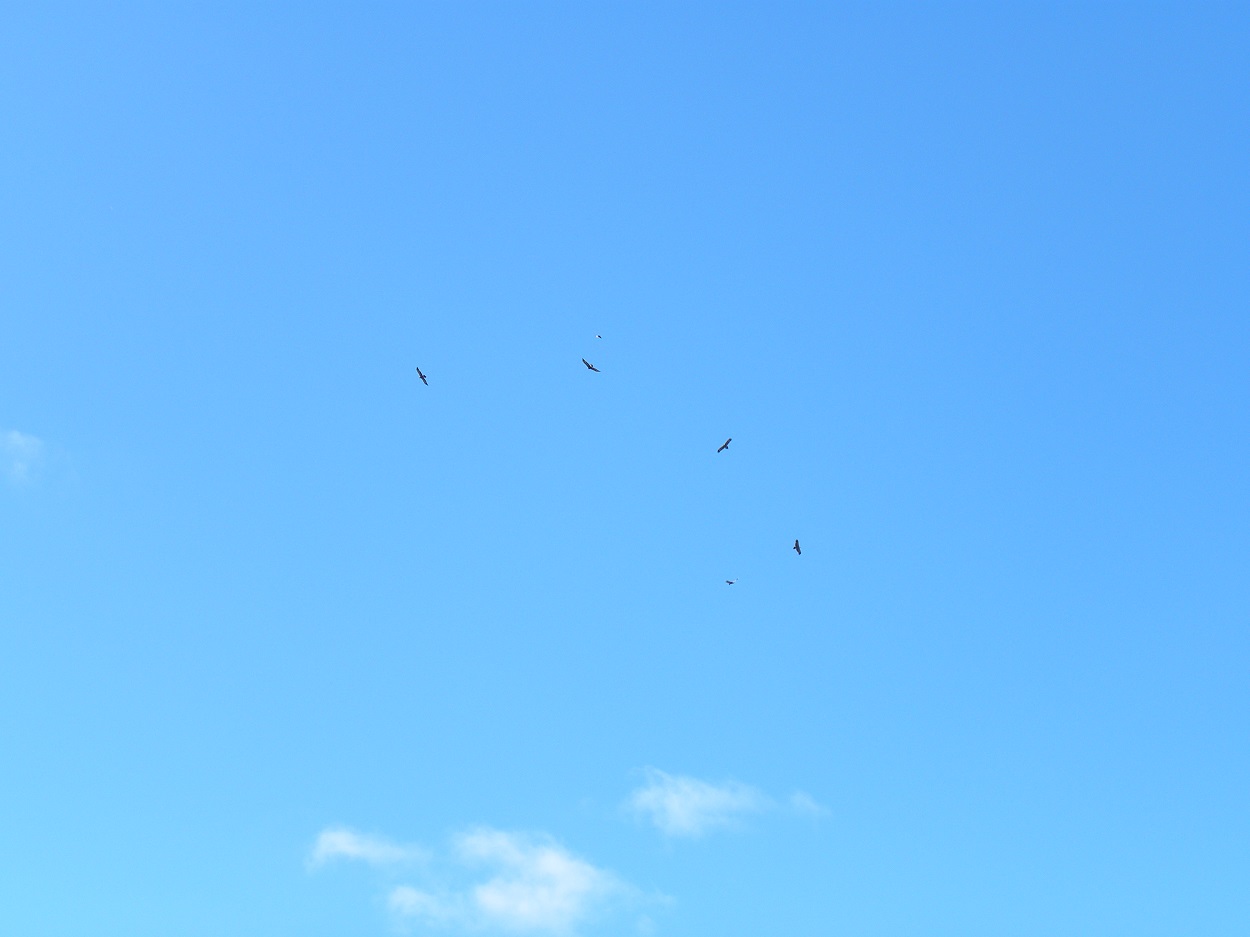
Five Wedge-tail Eagles under siege! JCD photo

Five Wedge-tail Eagles
under siege! JCD photo

There are five wedge-tail eagles in the photo. The attacker (a magpie?) is above the eagle highest in the picture. Double-click on picture to expand.

Mount Bryan, VK5/SE-001, 29th September 2014

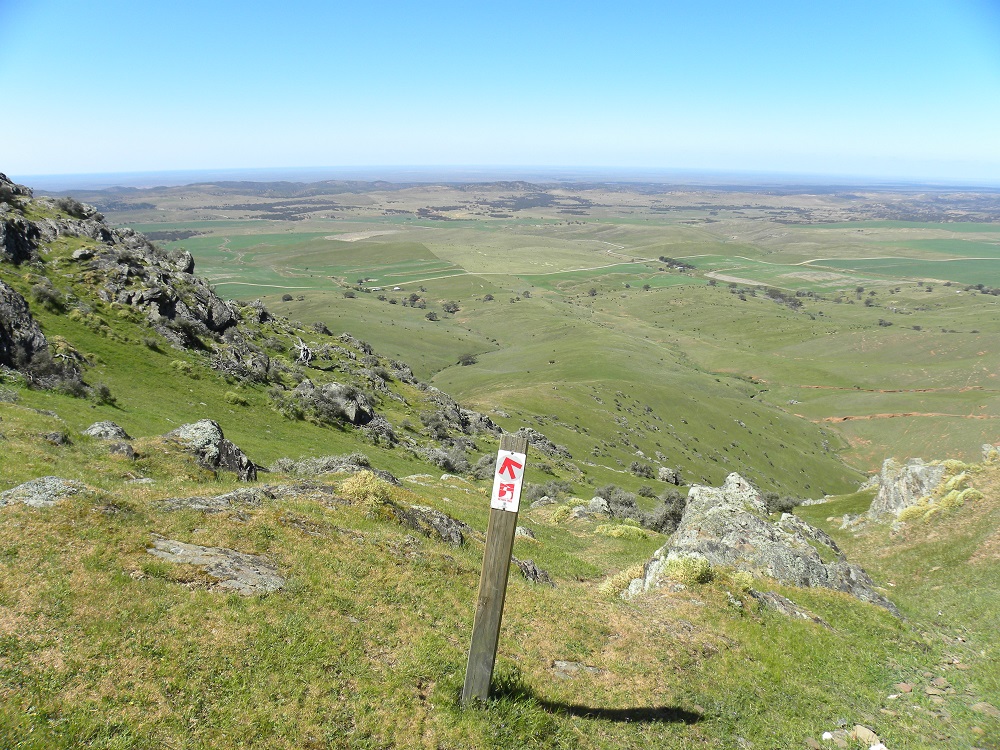
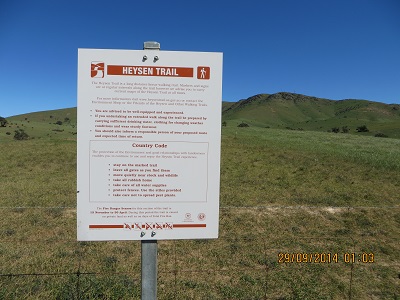
View from Mount Bryan: Heysen Trail marker in foreground JCD photo

View from Mount Bryan: Heysen Trail marker in foreground JCD photo

Today we climbed Mount Bryan, VK5/SE-001, 933 metres and ranked 49th highest in the State. It took us just over one and three quarter hours. It is a steep climb, but the view is great. I operated on two bands, 40 and 20 metres and my log is reproduced below. It took a while to find the best access point. I read Paul’s blog (VK5PAS) and we visited the Wild Dog Hotel (simplified name) at Hallett to seek directions. They remembered Paul, but the person who provided the directions was not present. The two persons we spoke to referred us to the the Mini Mart and the owners suggested the Heysen Trail access point on the northern side, but we decided after a look, to travel along Mount Bryan East Road from the township of Mount Bryan, about 16 kilometres to the Southern end Heysen Trail point. (We decided not to walk in from the northern end after being warned about snakes and seeing the long grass in the paddocks through which the Heysen Trail passes. The Trail, on private property here, is located on the fence line). After parking our 4 x 4, loading up our gear, we embarked on what was a hard walk for us and quite steep towards the summit. But I need the exercise. The grass was much shorter here and the path was well worn giving a clear view of what was ahead.

Jenny explored the summit and I enjoyed the operating conditions. Some Victorians suggested I move to 20 metres. And I did! But, I always like to ensure the VK5 chasers have a chance to have a contact first and Larry, VK5LY, kindly spotted me. Conditions on 20 metres were really good into Victoria, New South Wales and the ACT. I also enjoyed a contact with Mike, VK6MB, 5 and 8 both ways. Andrew, VK1NAM, gave me 5 and 9: of course he was 5 and 9+ on the FT817.

Heysen Trail Notice & access point

Heysen Trail Notice & access point: Mt Bryan in background

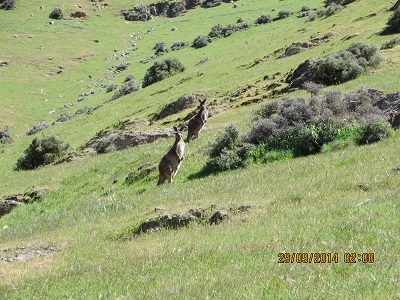
A couple of onlookers!

A couple of onlookers!

Among the big boys! JCD photo

Among the big boys!
JCD photo

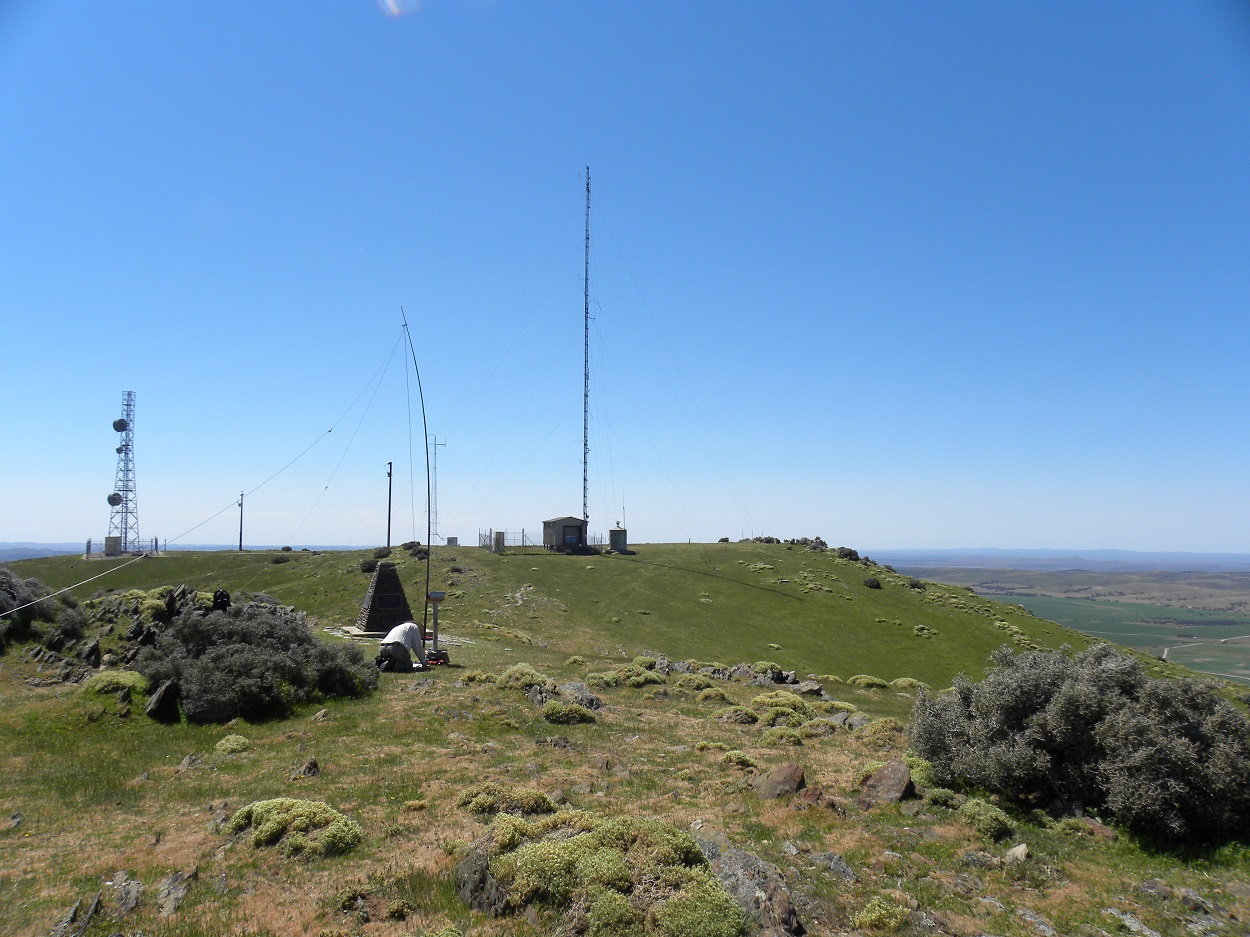
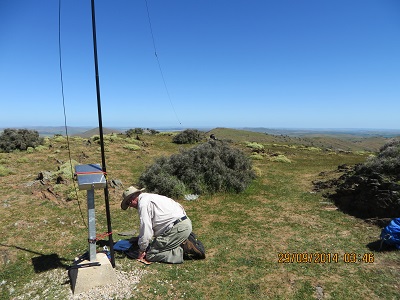
Mount Bryan & VK5BJE/P5

Mount Bryan & VK5BJE/P5

Trig Point and memorial

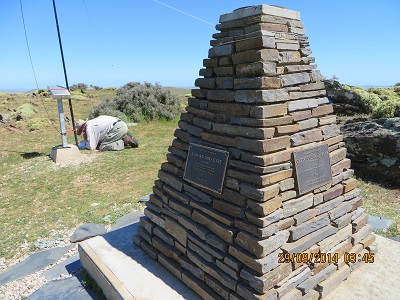
Trig Point and memorial

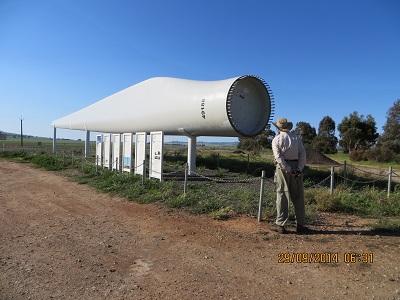
These blades are big!

These blades are big!

At Mount Bryan township there is a display relating to the Hallett wind-farm which provides sufficient power for 40,000 South Australian homes. A blade from a turbine is on display. There are three such blades for every generator.

Activator Log

Time Call Band Mode Notes
03:01z VK3VBI 7MHz SSB Ron 50k West of Warrnambool
03:06z VK5LY 7MHz SSB Larry
03:10z VK2NSS 7MHz SSB Steve, 50k West of Canberra
03:12z VK5HS 7MHz SSB Ivan
03:17z VK1MA 7MHz SSB Matt
03:19z VK5MCB 7MHz SSB Mike, Port Pirie
03:23z VK5NQP 7MHz SSB David
03:24z VK5WG 7MHz SSB Nev
03:27z VK5IS 7MHz SSB Ian
03:30z VK3BHR 7MHz SSB Phil, Bendigo
03:34z VK5TN/P3 7MHz SSB Robin, at Mildura
03:36z VK3FPSR 7MHz SSB Peter
03:40z VK3PF 14MHz SSB Peter
03:42z VK2DAG 14MHz SSB Matt, Central Coast
03:43z VK1NAM 14MHz SSB Andrew
03:46z VK1MA 14MHz SSB Matt
03:48z VK2AFA 14MHz SSB Sam, 30k North of Newcastle
03:49z VK3DET 14MHz SSB Ernie, Ballarat
03:50z VK2TWR 14MHz SSB Rod
03:51z VK3AFW 14MHz SSB Ron
03:51z VK2GAZ 14MHz SSB Garry, Richmond, NSW
03:55z VK2UH 14MHz SSB Andrew, Yass
03:57z VK3AV 14MHz SSB Bernard
04:00z VK2MIK/P2 14MHz SSB Mik, Lighting Ridge
04:02z VK6MB 14MHz SSB Mike
04:04z VK3UH 14MHz SSB Ken
04:07z VK1NAM 14MHz SSB Andrew
Mt Bryan