Cape Gantheaume Conservation Park, 14th May 2014

The Parks brochure we had, from an earlier visit to Kangaroo Island, describes Cape Gantheaume Conservation Park as containing ‘vast areas of wilderness, a fresh water lagoon and Seal Bay, the home of the Australian Sea Lion’. However, if you look at a more recent map you will see that the Park is now in two sections, but by far the largest part of the land has been re-gazetted as the Cape Gantheaume Wilderness Protection Area. I was unable to find on the Department’s web site a definition of the various types of protected areas, but a Departmental Officer has promised to send the relevant definitions to me. On the face of it, it appears that a Wilderness Protection Area must contain substantial areas of pristine country. Similar processes have occurred elsewhere on the Island.

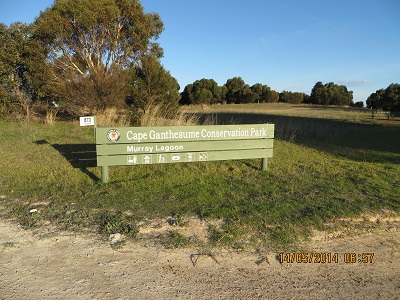
Cape Gantheaume Conservation Park - Murray Lagoon

Cape Gantheaume Conservation Park – Murray Lagoon

I was able to have seven contacts from this Park before making the trip back to American River, our base for the last four days of our visit to Kangaroo Island. Beginning at 06:12 UTC, contacts were with VK3BHR, Phil; VK5GI, Norm; VK5KGP, Graham; VK5ZAR, Arno; VK5KLV, Les; VK5GJ, Greg and VK5HS, Ivan.

Nepean Bay Conservation Park, 14th May 2014

While at the Friends of Parks Inc. Forum I heard Parks staff refer to small Parks as ‘Pocket Parks’. Nepean Bay Conservation Park is clearly a pocket park: it is a mere 30 hectares and conserves typical Kangaroo Island coastal sand plains habitat. It was gazetted in 1974. We had a challenge in locating this park. We could not find any signs. But, we did find the boundary fence. I am a devotee of good maps and GPS technology! We travelled down a long, winding track, running parallel to the shore-line until we could go no further. There were too many trees were across the track as a result of strong winds and storms.

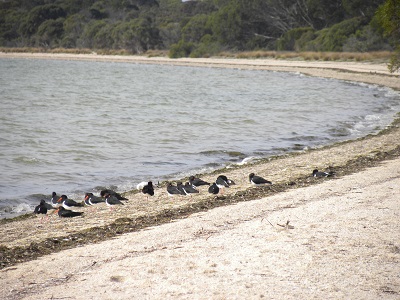
Pied Oyster Catchers at Nepean Bay CP: JCD photo

Pied Oyster Catchers at Nepean Bay CP: JCD photo

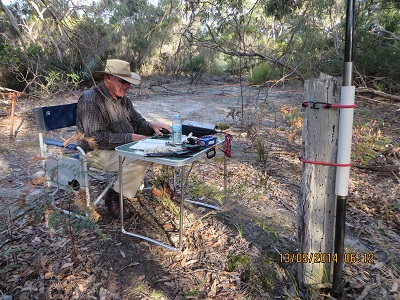
Eleven contacts were enjoyed from this Park beginning at 04:01 UTC. They were: VK5LY/M, Larry; VK5KGP, Graham; VK3PF, Peter; VK2JDS, Dave; VK5FD, Allan; VK3XNH, Neil; VK5ZAR, Arno; VK5AN, Graham; VK3AFW, Ron; VK5ZGY, Greg and VK5NFB, Don. My operating position was just a few metres away from the beach and partially shaded by coastal scrub. One could describe such a spot as idyllic!

Kelly Hill Conservation Park, 13th May 2014

Kelly Hill Conservation Park, of 21,254 hectares, is known for its ‘extensive cave system, wilderness areas and beautiful coastal scenery’. We found a spot near Gate 1, no where near the main entrance to the caves, and were thus undisturbed except for some contractors leaving the Park in a minibus.

Kelly Hill Conservation Park

Kelly Hill Conservation Park – Grassdale

In the bush at Kelly Hill CP

In the bush at Kelly Hill CP

I had contacts beginning at 06:08 UTC beginning with: VK5KGP, Graham; VK5GJ, Greg; VK5WG, Nev; VK3AMB, Bernard; VK5TW, Trevor; VK5KLV, Les; VK5ZGY, Greg; VK5ZQP, David; VK5LY/P3, Larry in Murray-Sunset National Park; VK5ADL, David; VK3LY, Bill; VK5GI, Norm; VK5NAQ, Peter; VK5ZAR, Arno; VK3PF, Peter; VK5FO/M, Bob; VK3BHR, Phil; VK2NEO, Peter and VK5LY, Larry making 19 contacts in all.

SOTA summit VK5-SE-018, un-named summit, 13th May 2014

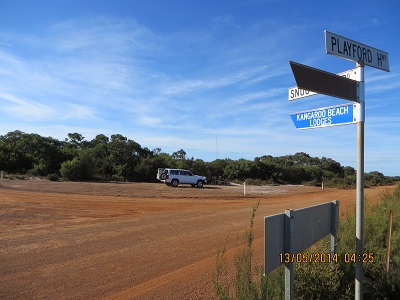
The highest point on Kangaroo Island - 307 metres asl - just in the bush behind the car

The highest point on Kangaroo Island – 307 metres asl – just in the bush behind the car

If you have a look at a reasonable map of Kangaroo Island there is a dot indicating the highest point on the Island. The dot is on the corner of Playford Highway and Snug Cove Road. The summit is un-named. VK5PAS, Paul and VK5AKH, Andy activated this summit in August 2013 in weather which even the ducks would complain about! We were more fortunate with the weather. It was a warm day and a shirt without jacket was fine.

I was able to enjoy twelve contacts on 7.090 beginning at 04:22: VK5TW, Trevor; VK5ZGY, Greg; VK5GJ, Greg; VK5LI, Craig; VK5FD, Allan; VK3AMB, Bernard; VK5WG, Nev; VK5BC/M5, Brian; VK5KLV, Les; VK3BHR, Phil; VK5FAKV, Shawn and VK5PI, Mark. This is an easy summit, with the high point being just off the road, behind our vehicle, in the trees.

Flinders Chase National Park, 13th May 2014, VKFF – 173

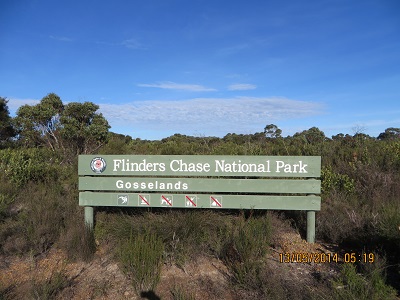
Flinders Chase National Park - Gosselands

Flinders Chase National Park – Gosselands

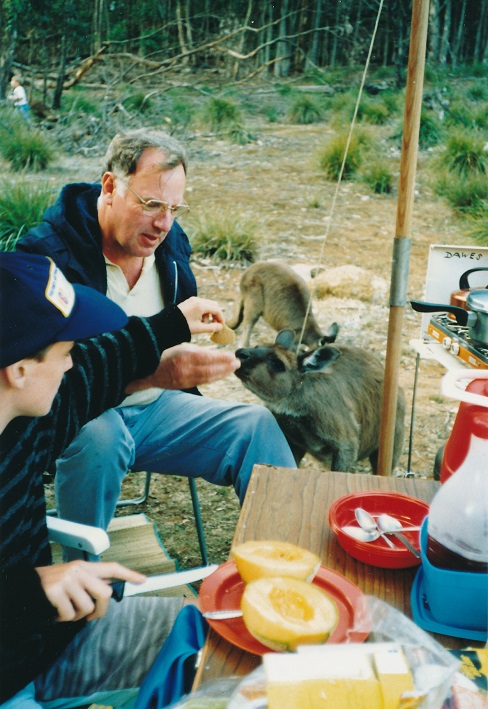
Flinders Chase National Park is the iconic Park on Kangaroo Island.  The Park contains the Remarkable Rocks, Admirals Arch vast areas of wilderness and Kangaroos who know how to raid your tent, well at least that was the case on our first visit there many years ago. It is probably not like this now: the Parks authorities actively discourage the feeding of native animals and there have been a number of significant fires through the Park.

Nicholas and I befriended 1990 Flinders Chase NP

Nicholas and I befriended!
1990 Flinders Chase NP JCD photo

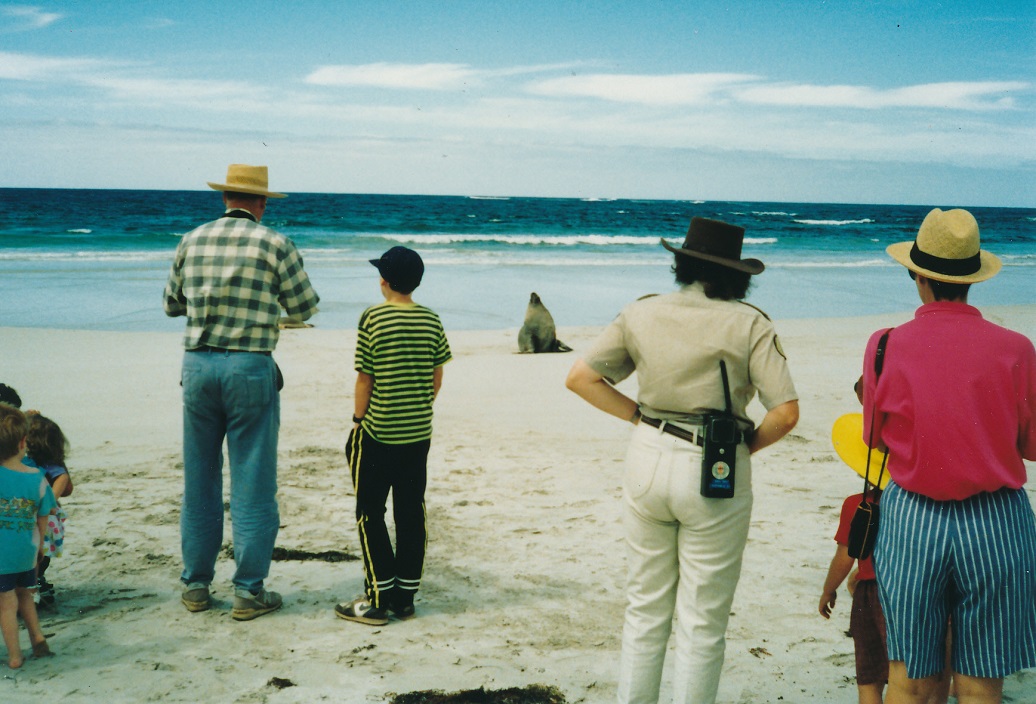
An Australian Sea lion & look a the size of the Ranger's radio JCD photo

An Australian Sea lion & look a the size of the Ranger’s radio! JCD photo

You can also sharpen up your surfing skills by watching the seals at play. They are fantastic.  To give you an idea of the size of Kangaroo Island Flinders Chase National Park is 110 kilometres west of Kingscote. The brochures advising of the attractions of Kangaroo Island mentions its size, by stating it is the third largest island in Australia. Well can you work it out? I couldn’t at first. Here is the answer. While the Australian mainland is an island it is also a continent. So take that out of the equation.  Tasmania is the largest island, then  Melville Island in the Northern Territory then Kangaroo Island. We did not go to the main part of the Park on this occasion. We chose to keep the trip west as short as we could and thus activated from the eastern end of the Park.

Flinders Chase National Park - Gosselands - my spot

Flinders Chase National Park – Gosselands – my spot

I found a great spot in this Park just off the Playford Highway. We carefully negotiated a rather damp track watching for any signs of softness in the gravel. I set up in the usual way and always wondering how it will all turn out on the day. It was great.  Fourteen contacts kept me busy: VK5ZAR, Arno; VK5KGP, Graham; VK5KLV, Les from Port Augusta; VK3AMB, Bernard; VK3FQSO, Amanda; VK5TW, Trevor; VK5AV/M5, Tim near Lamaroo; VK5ZGY/M5, Greg; VK3UP/P3, Terry at Ballarat; VK3NFC, Steve; VK5NAQ, Peter; VK3LY, Bill; VK5BC/M5, Brian and VK3FJAE, Doug from Maryborough.

Beyeria Conservation Park, Kangaroo Island, 12 May 2014

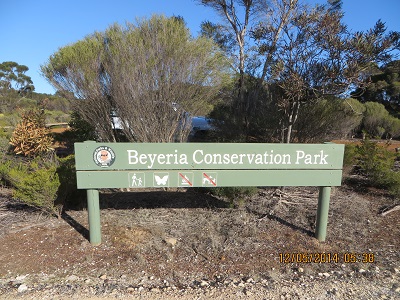
The Friends of the Parks Inc. Forum concluded today after lunch. After getting a few supplies in Kingscote we travelled to Beyeria Conservation Park. Beyeria Conservation Park was established to preserve 184 hectares of remnant endemic vegetation on the Eastern end of Kangaroo Island. There is a walking trail of about 1.5 kilometres through the Park with interpretative signs.
Beyeria Conservation Park

Beyeria Conservation Park

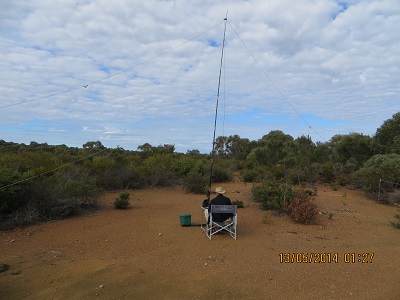
I set up my station near the Park entrance, thus not walking off track onto newly planted areas. After checking 7.100 I gave a CQ call at 05:57 and was answered by VK5ZAR, Arno. Arno was at home in Adelaide and signals were 5 and 9 both ways. Then followed VK5GW, Graham using his KX3 in Norwood; VK3AMB, Bernard; VK3KLB, Albert at Hastings; VK5ZLT, Alan; VK5KGP, Graham; VK3LY, Bill; VK5LI, Craig; VK3FXUK, Alan at Ararat and, finally, VK5TW, Trevor.
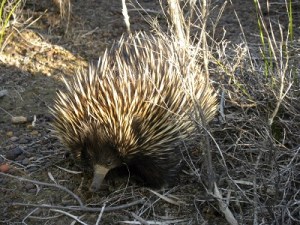
A local at Beyeria CP: JCD phot

A local at Beyeria CP: JCD photo

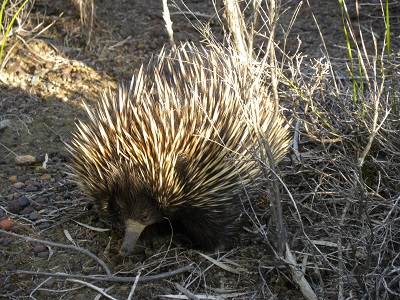
The Friends of Parks Inc. is the peak body in South Australia which represents the interests of volunteers in SA Parks, in the wider community and with the SA Government Department responsible for Parks, the Department of the Environment, Water and Natural Resources. The forum is held on an annual basis. My wife and I are Friends of Scott Creek Conservation Park and we were the only members of our Group who attended. Attendees meet all of their own costs. We have been to a number of Forums over the years and have enjoyed the experiences immensely. The program is constructed of lectures with high profile speakers and topics. Here are a few highlights: Citizen Science (using community members in the collection of data); the concept of ‘aquapelago’ which emphasises the integration of island and coastal communities, resources, histories and imaginations (such as songs); A study of Echidnas and Goannas on the Island, their behaviours and natural history and field trips to Parks, to name just a few. While I was unable to formally present on amateur radio and parks, I was able to share my enthusiasm for portable operation and the science and art of radio communications with many delegates. Radio is used in the scientific community for tracking animals and some of the participants had knowledge of frequency and propagation characteristics and the behaviour of radio waves in various natural environments, such as animal burrows, for example. Fairy penguins have been fitted with GPS trackers and their sea voyages mapped. Quite a few were interested in what I do and I was ‘caught’ in action at Beyeria CP this afternoon by two delegates. ‘Fox-hunting’ is work for many of these scientists! Kangaroo Island, fortunately, does not have foxes. Radio tracking has been used in the programs to eradicate fallow deer and goats. The ‘Judas’ goat is fitted with a radio transmitter and released and spends its time finding its ‘friends’. This process works most of the time because goats are sociable animals and live in communities. The friends are then dispensed with by shooters. The trouble is that the goats must have reflected on this and they have less and less to do with ‘Judas’ goats. Perhaps they recognise the collared goat? Or perhaps the goats have become more suspicious of outsiders? We were told that there is a small population of six goats remaining and they are proving elusive! This is a very sketchy summary of one of the papers.

Kangaroo Island November 2011

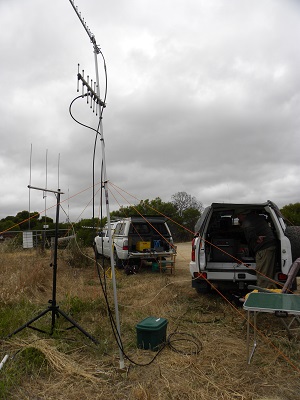
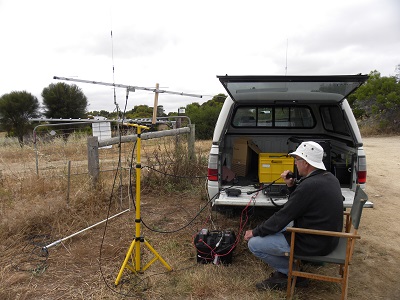
In November 2011, VK5KC, David and I and our spouses travelled to Kangaroo Island for the Spring VHF UHF Field Day. We had a reasonably modest station and here are two pictures from that trip. We established our station (s) near Emu Bay on the Northern coast of Kangaroo Island looking North over Backstairs Passage towards the mainland.
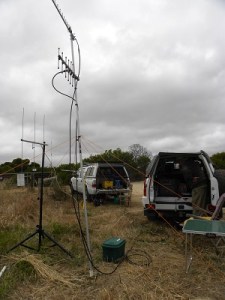
Kangaroo Island Spring Field Day 2011: our station
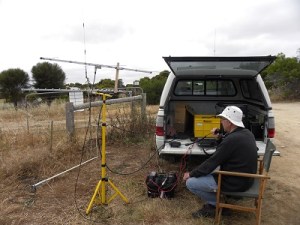
Kangaroo Island Spring Field Day 2011: our station

David, VK5KC, at work, November 2011

David, VK5KC, at work, November 2011
Lake Eildon National Park, VKFF-625

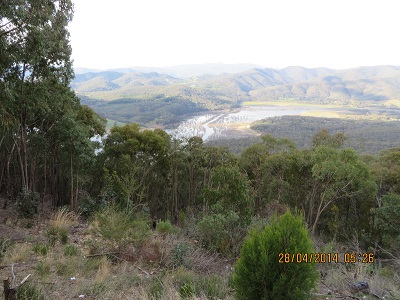
We left Mount Skene and travelled to Lake Eildon and decided to take the Jamieson to Alexandra road and arrived at the Lookout Point in Lake Eildon National Park. On my Rooftop’s Map it is named Williams Lookout. At this point, about six kilometres past the turnoff, there is a great view of the upper reaches of Lake Eildon. It is spectacular.

I set up and checked the frequency at 7.090 and then gave a call at 05:19. Twelve contacts later at 05:57 it was time to pack up and head for Seymour. I spoke with VK5LY, Larry;  VK3FQSO, Amanda; VK3FLAK, Bob; VK2AMA, Ross; VK2KVH, Victor; VK3NBC, Rob; VK5HS, Ivan; VK2CCW, Michael; VK5MBD, Bill; VK5FGRY, Gary in Morialta Conservation Park, VK7ZGK, Graham from Hobart and finally at 05:57, VK7KEV, Kev from Wynyard.

Lake Eildon National Park from Lookout

Lake Eildon National Park from Lookout

I decided to pack up as we had to drive to Seymour. I was sorry we didn’t have more time to explore Lake Eildon National Park.  It would be a great place to camp for a week and explore.

Mount Skene, Sota Summit VK3 VE 031, 28th April 2014

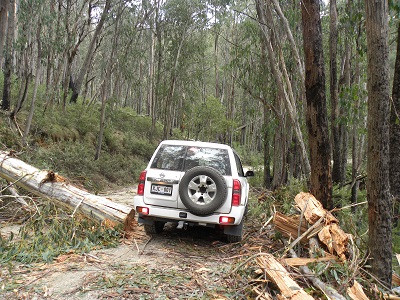
After some encouragement from VK3PF, Peter, I decided to activate Mount Skene VK3 VE 031. We left Bairnsdale at 08:00 and arrived at Mount Skene at about 12:00 noon. We enjoyed the drive. Licola is pretty much as we remembered it. The road is gravel a few kilometres after leaving Licola and returns to a sealed tarmac just before Jamieson. We saw only four vehicles on the road after Licola. There are a few pot holes and the usual corrugations on corners. The road is two-wheel drive capable providing care is taken. Travelling slowly and picking your path is the key to success. Some kind person had recently cleared a break through a fallen tree.

Tree over road between Licola and Mt Skene

Tree over road between Licola and Mt Skene JCD photo

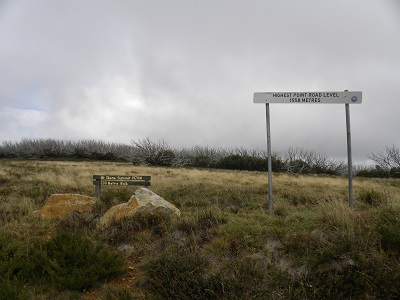
It is an easy summit. You only have to walk from the parking area to the summit and carry your gear about 200 metres. The trig point is in great condition and make sure you read the plaque under the trig point. The altitude is given as 1551 metres. The old track is just visible, but if you look for two large rocks put in place by the authorities to stop vehicles going off road, you will see the track.

Mount Skene summit track JCD photo

Mount Skene summit track JCD photo

After setting up at the summit, 13 contacts were enjoyed. I am really appreciative of those who gave me a call, given that most of the regulars were probably back at work. The first contact was at 02:17 UTC and the last at 02:58.  At 02:17 I worked VK3FQSO, Amanda; VK3YN, Mark at Bendigo; VK2JNG/P2, Gerard QRP; VK3UH, Ken; VK2IO, Gerard; VK2AMI, Ross; VK5HS, Ivan; VK2UH, Andrew; VK3AFW, Ron; VK1MBE, Andrew; VK5LY, Larry; VK3XD, John and at 02:58, VK3YN, Mark.

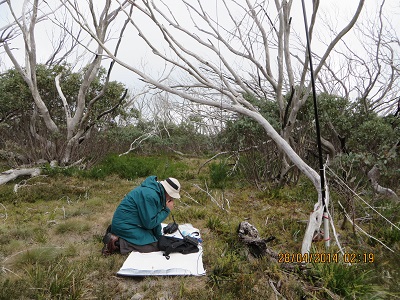
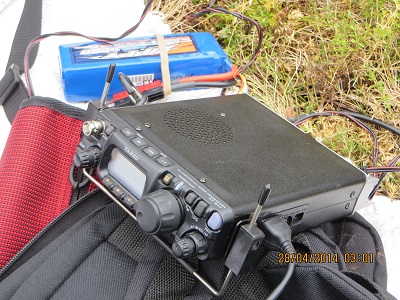
The first picture shows me kneeling on a rug and operating the FT817. While I had my rain coat on and there were a few spots it was not really cold. My nine metre squid pole is inserted into a tube and tied to a stump. Power for the five watt radio was supplied from a 4.2 amp hour LiFePO4 four cell battery.

VK5BJE at Mt Skene

VK5BJE at Mt Skene JCD Photo

FT817 and 4.2 Amp hour LiFePO4 battery

FT817 and 4.2 Amp hour LiFePO4 battery

Mitchell River National Park, 27th April 2014, VKFF-321

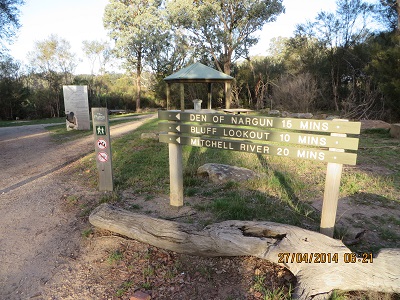
The Den of Nargun - Mitchell River NP

The Den of Nargun – Mitchell River NP

By the time we arrived at Mitchell River National Park it was getting pretty late in the afternoon. The Picnic area at the beginning of the
Den of Nargun walk was our selected spot within the Park and my wife decided to take the walk to the Den. It is supposed to take 15 minutes down and 20 back, but she raced back in 15 minutes because she thought I would be getting worried about her because it was close to sunset. Unfortunately, she found me completely engrossed in working many qsos!  I enjoyed thirteen contacts from 06:26 to 07:15. My first contact was with VK2TWR, Rod; VK2LAX, Rod; VK3TKK, Peter; VK3MEG, Steve; VK2JDS, Dave; VK5PAS/P5, Paul at Mt Gawler, VK5 SE 013; VK7EPF, Ray at Hobart; VK3GHZ/P3, Rhett at Wilsons Promontory National Park; VK5AV, Tim; VK5FBAA, Rod;  VK3FQSO, Amanda; VK3FMCR, Clive and VK2ZUH, John at 07:15.

The Lakes National Park, 27th April 2014, VKFF-484

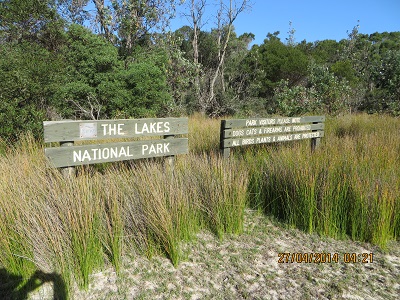
The Lakes National Park

The Lakes National Park

We visited The Lakes National Park today. It was quite a drive from Orbost and I wish to apologise for those who were listening before 12:00 noon local time. However, I was on the air from 02:39 to 03:54 UTC and secured 22 contacts. It is a beautiful park and I appreciated the calls.

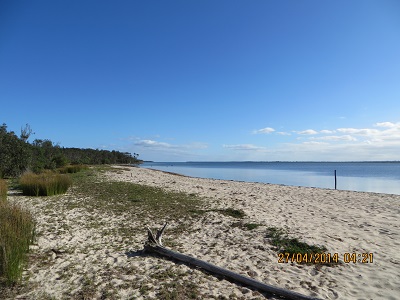
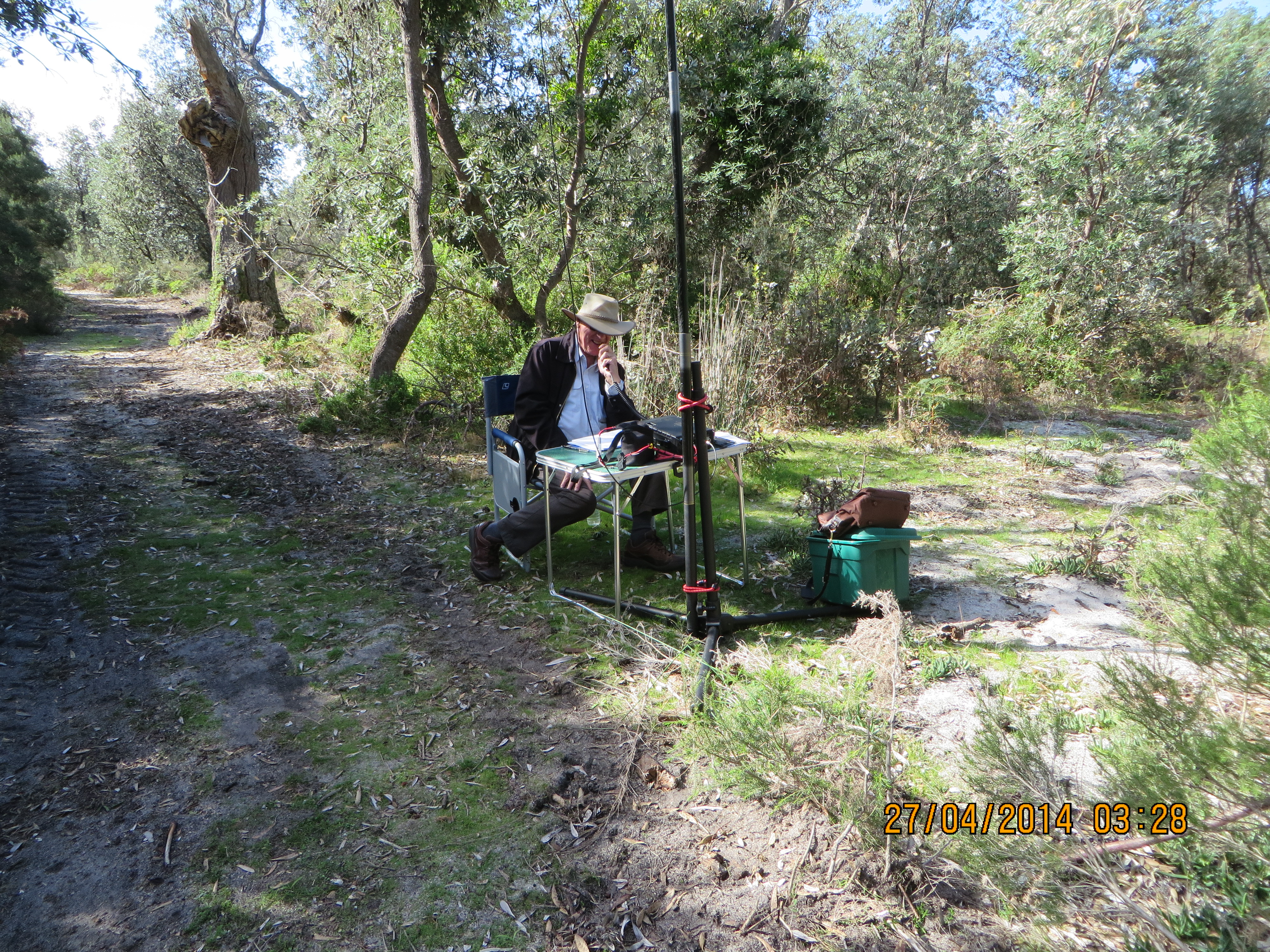
I used my ‘new’ FT897D set for ten watts and my home brew linked dipole. We found a great spot at a day visit area and there were no visitors except us. My spot was about 50 metres from the lake-side beach. It was about four kilometres into the Park. This is one area of Victoria where we had not been before. It was an idyllic spot.

At 02:39 my first contact was with VK3FB/P3, Len; VK3BHR, Phil; VK1GG/M, Chris with a strong signal; VK3ZLD, QRP, Louis; VK3PF/P3, Peter at French Island National Park, a new park for me; VK5FCDL, Col;  VK5PAS/M5, Paul; VK3JM, Fred; VK3CBV, Brenton; VK2LAX, Rod; VK3VCE, Dave; VK3UH, Ken; VK2HRX, Compton; VK7FMPR, Mark; VK3TKK, Peter; VK3YSP/P3, Joe an Julie at the antenna proving ground (a small park in Oakleigh); VK3FOWL/P3, Julie; VK3ERW/M, Erwin; VK3MMX, QRP, DarrenVK2JCC/P2, Colin at Sydney Heads, a scenic location but not a Park; VK3ANL/P3, Nick at SOTA summit  VK3 VG 001 and finally, VK1MA/P2, Matt at VK2 ST 005.

A view of the Lake

A view of the Lake

IMG_0279

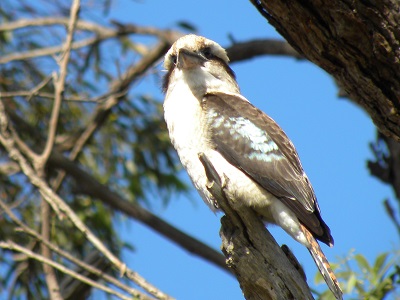
A Kookaburra at work - The Lakes NP JCD photo

A Kookaburra at work – The Lakes NP JCD photo