I was pleased to cross the 800 threshold late in August 2019. Thanks to all of the activators who made this award possible. In more recent times CW (VK5PF) contacts are making nearly a quarter of my qsos. That has slowed down a bit with Gerard, VK2IO, overseas at the moment.
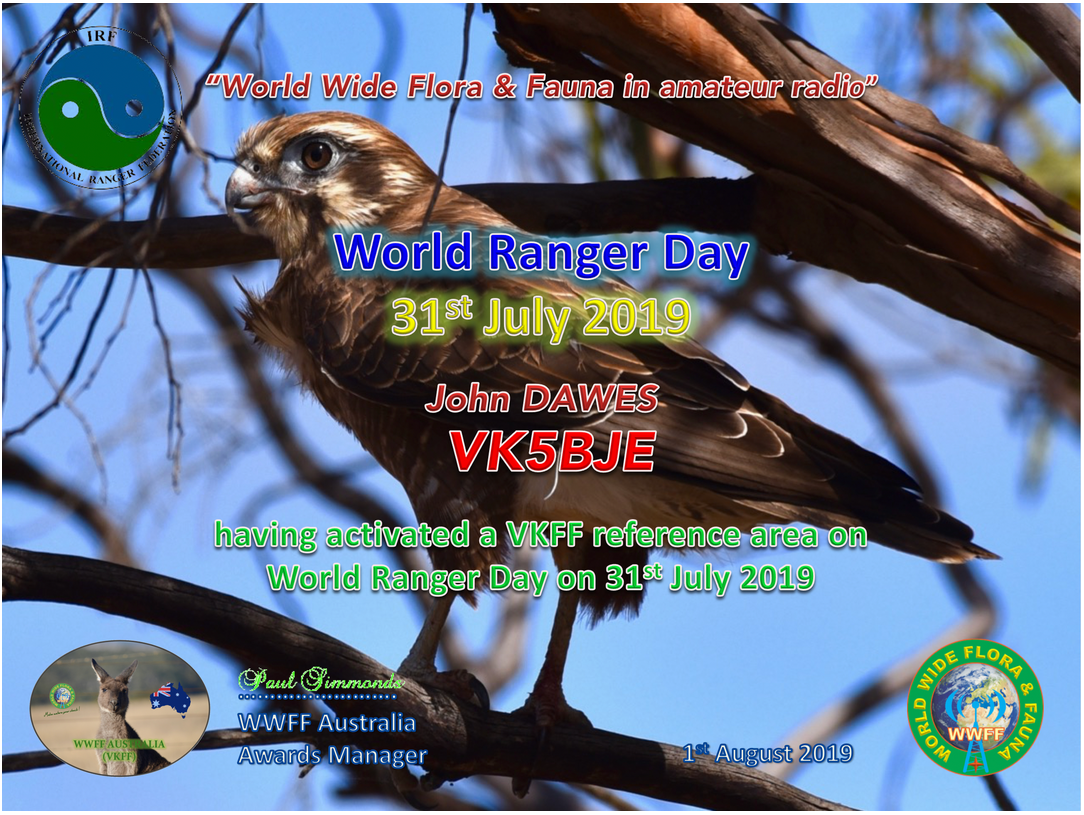
”World Ranger Day both commemorates Rangers killed or injured in the line of duty and celebrates the critical work Rangers do to protect the world’s natural and cultural treasures.
World Ranger Day is observed annually on the 31st of July and is
celebrated by the International Ranger Federation’s (IRF’s) member
Associations, The Thin Green Line Foundation, and by organisations,
schools and individuals who support the work of Rangers and the IRF
worldwide.
The first World Ranger Day was observed in 2007 on the 15th anniversary of the founding of the IRF.
Let’s pause for a moment to reflect on the sacrifice that these Rangers make; to honour the fallen Rangers and their colleagues who still bravely undertake their role in the field.”
The Photo and article comes from the This Green Line Organisation.
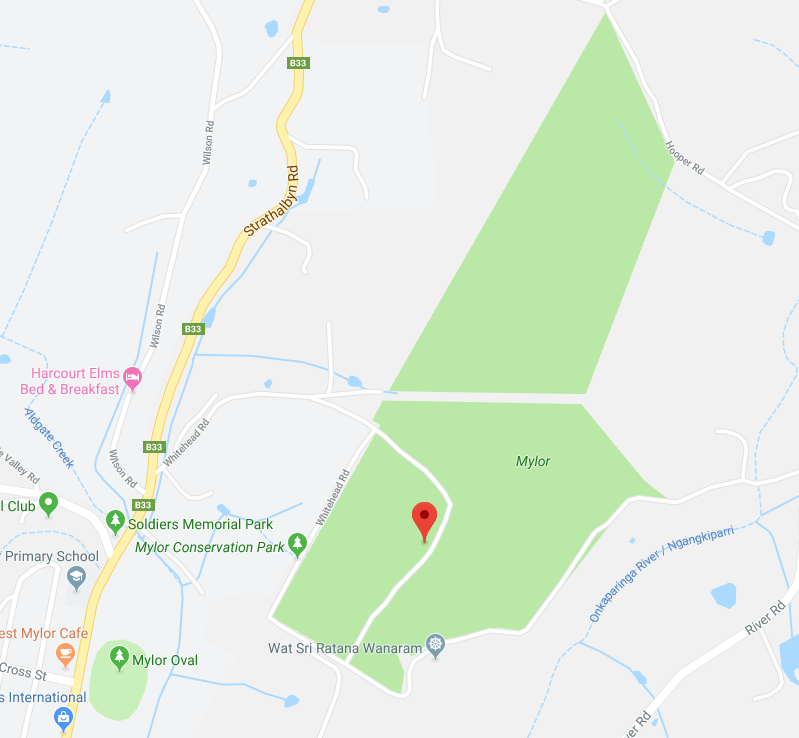
I chose to spend some of a bleak and cold winter’s day in Adelaide in the Mylor Conservation Park. This park is close to home: about six kilometers and is one of a number of the Greater Mount Lofty Parks nearby. I have activated the park a number of times and here is a link to my most recent activation:
My operating position is on the extension of Whitehead Road after it enters the Park. I setup about 100 metres inside the park. My XYL helped carry my gear.
Contacts
I worked Peter, VK3PF/P, at 02:59 from The Tara Bulga National Park (VKFF-0480). I had just set up and the antenna was set for 40 metres. However, I knew I had locals waiting for me on 80 metres and the following stations were worked:
VK5ZK
VK5KKT
VK3TKK/p VKFF-2452 The SpitWildlife Reserve
VK5WG
VK2IO/5 Wabma Kadarbu Mound Springs National Park VKFF-1114
VK6MB/3 Wychitella Nature Conservation Park VKFF-2236
VK4TJ
VK4/AC8WN
VK4/VE6XT
VK2IO/5 Wabma Kadarbu Mound Springs National Park VKFF-1114
VK3PI/P Kinglake National Park VKFF-0264 and VK3/VU-009
VK3SQ
VK4HAT
VK4HNS/P Tamborine National Park VKFF-0475
VK4RF
VK4HA
VK3PF/P Traralgon South Nature Reserve VKFF-2465
I made 21 contacts which included 11 park to park qsos. Soon after 04:12 I indicated that I would go QRT. It was cold!
I thank all of the chasers who gave me a contact and was delighted with my 80 metre results of seven stations which included two from VK3 and Gerard, VK2IO/5 at the Mound Springs in outback South Australia. I was pleased to participate in World Ranger Day from Mylor Conservation Park. I enjoyed the time out in the park especially the friendly, familiar voices and the chasing of other park operators.
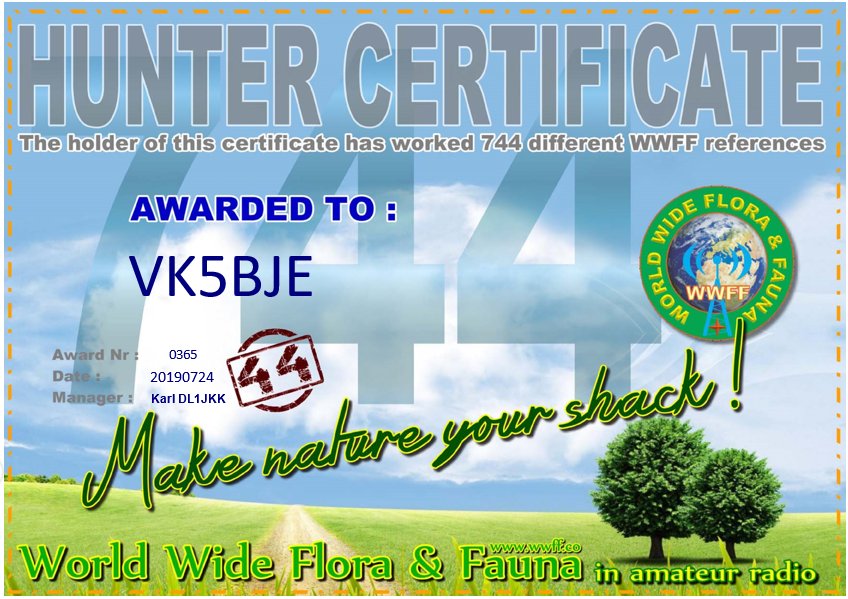
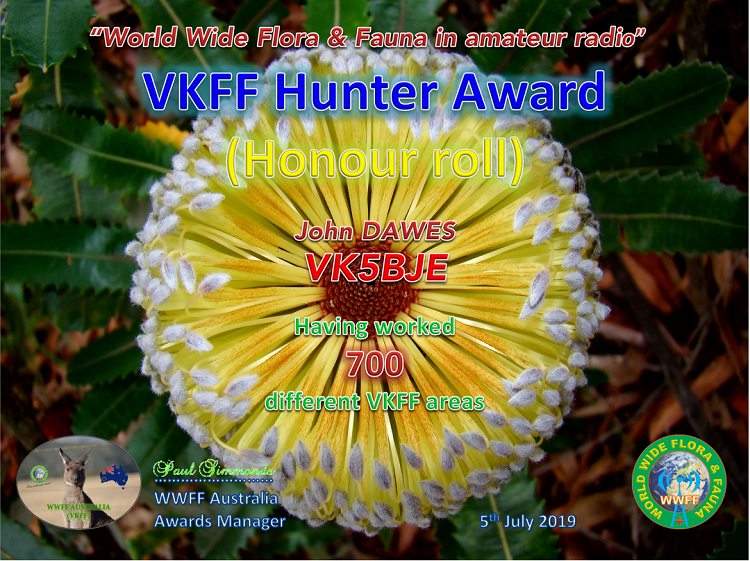
I sent off an application yesterday for this award for working 744 unique references. And the certificate was in my email this morning! I have had a bit of fun ever the last few weeks chasing VK2IO, VK6MB, VK3PF and VK1DI while they have been operating from parks in a variety of states. It has been really good to gain so many new parks. A big thank you to the activators.
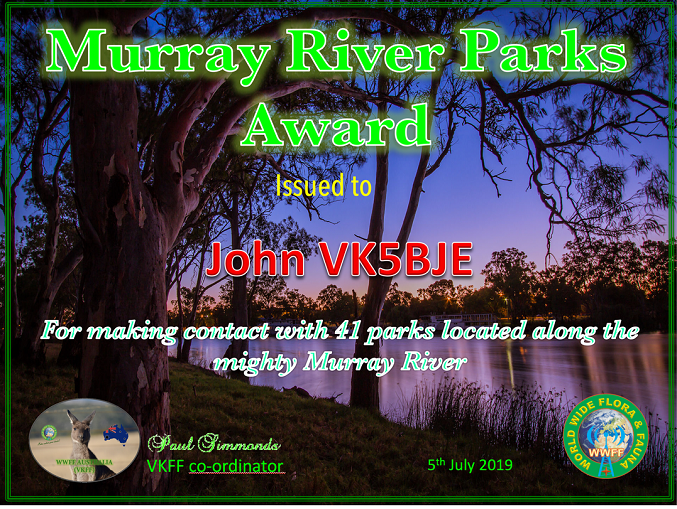
Thanks to a very generous series of activations by Mike, VK6MB/3, in the north western part of Victoria, I notice that Paul, VK5PAS, has issued a number of Murray River Parks awards to a few hunters. Mike certainly helped me over the line!
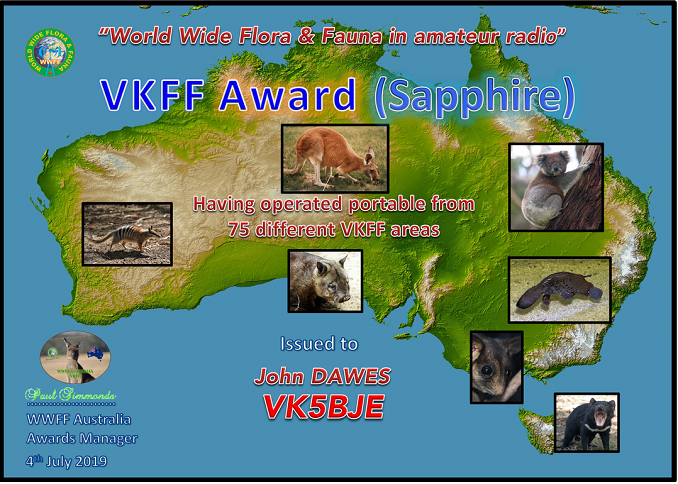
It is great to get an award for activating parks, in this case, 75. I did briefly hold out the hope I could get another 25 unique activations completed in 2019 to bring the total to 100. I will rest my case and not make promises.
My hunting activities tend to be in bursts, based on how I am traveling. This year has been challenging and I now have a TCXO (pacemaker) on board! I am hoping when this settles down I can get back to activating. I am pleased to log 700 different VK areas. Thanks to those intrepid activators who get outside, no matter what the weather, to keep us, the hunters busy.
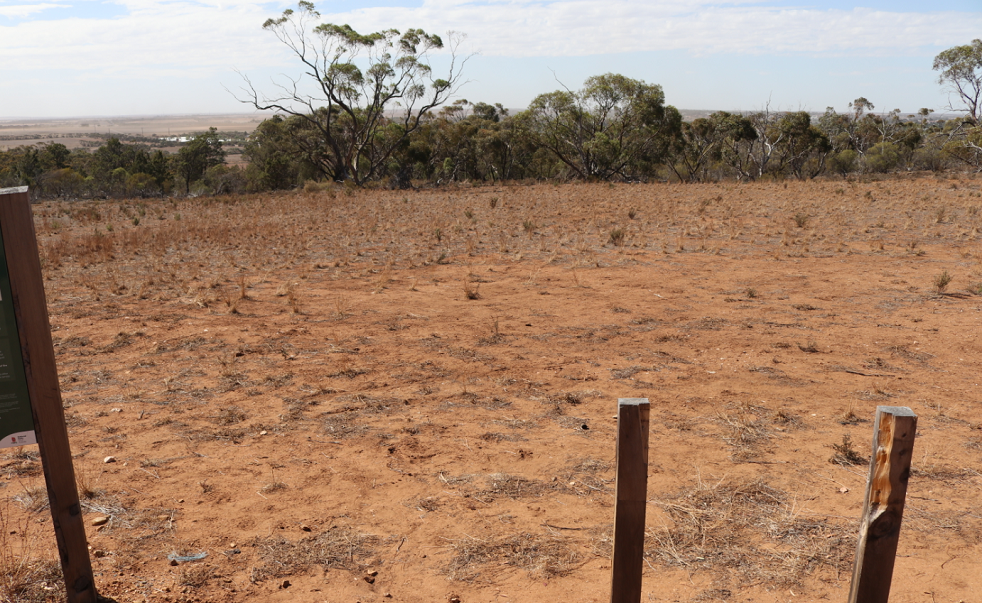
On the 16th April 2019 I left home soon after 0830 am to drive to Murray Bridge and Kinchina Conservation Park, VKFF-1764. I took the south eastern freeway and the 53 kilometres soon disappeared and I arrived at Murray Bridge and made my way along Maurice Road, past some homes, industrial sites and Mobilong Prison before arriving at the Park. I parked in the shade near the gate in quite a large parking area and set up my station and decided to get on the air milliseconds past the UTC rollover. I set up just inside the gate on a landscape which I told one of the operators reminded me of the surface of Mars: just red dirt and dust! At the time of setting up there was no wind and the temperature was in the twenties with a top predicted at 32 degrees for Murray Bridge. It was quite pleasant and it remained that way until just before noon. And then the wind started. Ivan, VK5HS, at Long Island Recreation Park was surprised about the wind. He said it was very still on the island and explained the calm by commenting on the lush and dense vegetation. Have a look at Paul’s excellent pictures on his blog, at https://vk5pas.org/ and you will see what I mean. It was only when they were back on the river did they experience the wind, which resulted in dust in the air, not as bad or as widespread as the one in March, but still a nuisance. I am beginning to wonder what has happened to the wonderfully calm, warm and sunny Autumn days of the past? I had a similar experience with the dust at Kyeema Conservation Park.
The Park was very dry and dusty when the wind blew
The reason for activating Kinchina Conservation Park was to provide some additional VHF/UHF experiences for Paul and his team. The two parks are just a few kilometres apart and at Kinchina CP I had the advantage of height. Unfortunately we were limited to just two metres FM. But I enabled Paul and his two colleagues, Ivan and Danny to enrich their logs with two metre FM Park to Park contacts.
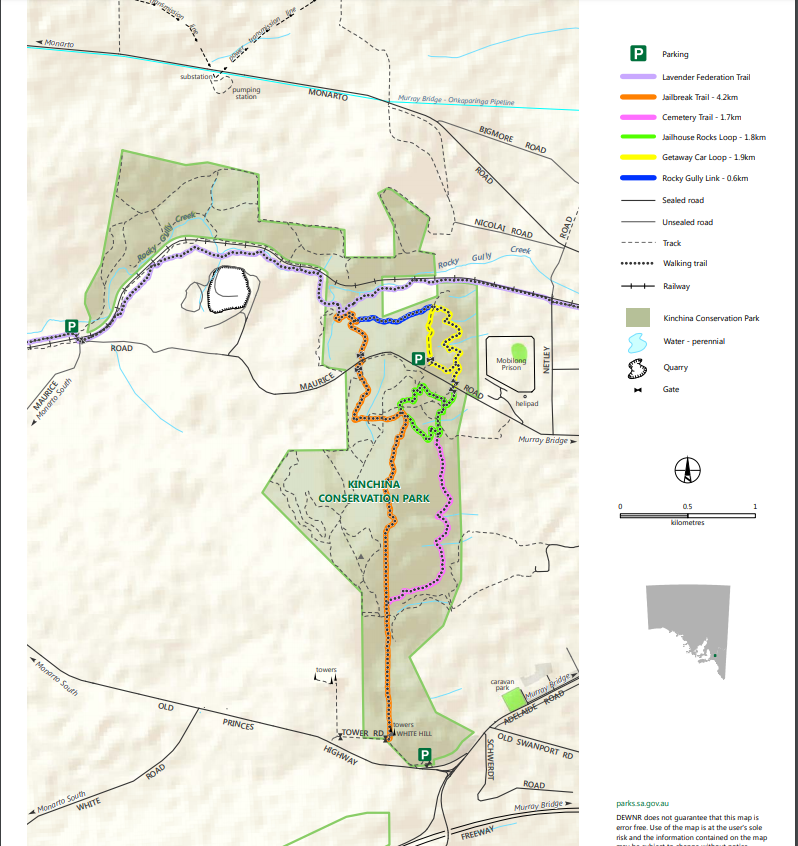
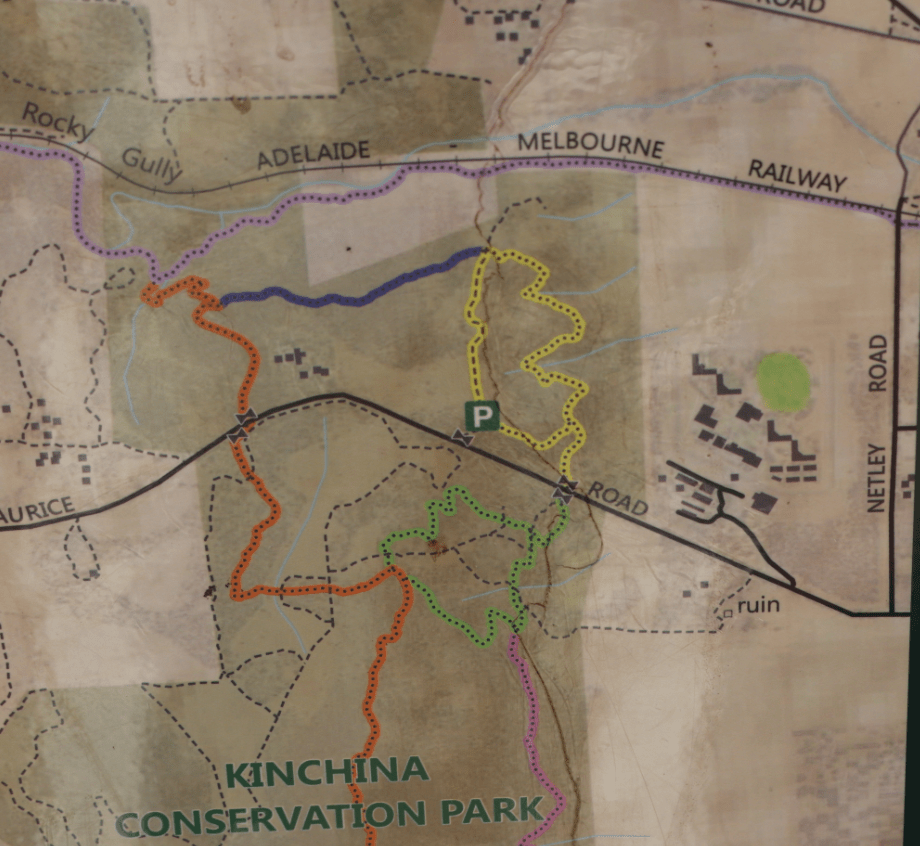
Kinchina Conservation Park, SA Government.
My operating position was near the parking sign on the map, just up the hill from Mobilong Prison. The Park is 414 hectares and is the largest remnant of intact bush in the area known as the Monarto Crown Lands. The land for the prison was also obtained from the same Monarto Crown Lands. The land was originally set aside for urban development. It is on the outskirts of Murray Bridge.
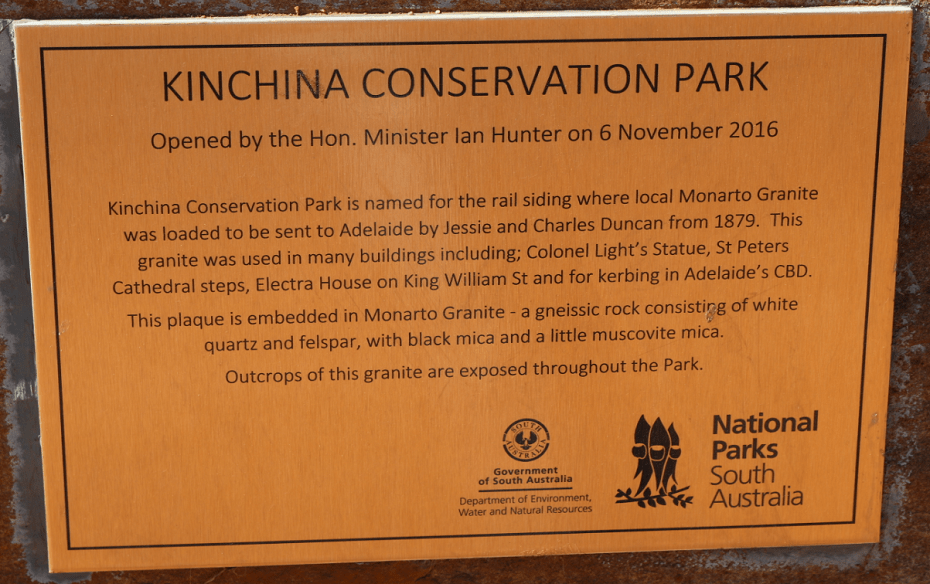
Plaque on granite block.
Park Notice Board. My operating position was just inside the Gate at P. The Park shares a boundary with Mobilong Prison on right of photo.
Contacts
My first contact was logged at 00:03 on 3.610 with VK5TW, Trevor, who had a great signal 5 and 9 and I received 5 and 5.
2. 00:06 VK5FANA, Adrian 59 both ways.
Despite calling CQ for a few minutes there were no more contacts on 80 metres. The band was also noisy, more so than at home, where 80m is invariably quiet.
So I migrated to 7.139 and enjoyed the following contacts:
3. VK3SQ 59 58
4. VK4FDJL 54 52
5. VK5PAS/M 59 59 Paul on his way to the boat ramp at Murray Bridge.
6. VK3PF
7. VK3FPSR
8. VK3DAC
9. VK2KYO
10. VK3FBRU
11. VK4AAC/3
12. VK2VH/3
13. VK2YMU
14. VK4TJ
15. VK4/AC8WN
16. VK4/VE6XT
17. VK3UH
18. VK5KLV
19. VK3ZNK/P Nick at VKFF-0745 Cape Liptrap Coastal Park
20. VK7JON
21. VK2IO
22. VK3DEK
23. VK3ZNK/P Nick at VKFF-0745 suggesting we try 21.344 which we did unsuccessfully
24. 7.144 VK5PAS/P VKFF-1724, Long Island Recreation Park, VKFF-1724
25. VK5HS/P
26. 7.139 VK3SLB
27. VK3CKC
146.500 FM
28. VK5PAS/P VKFF-1724
29. VK5DW/P VKFF-1724
30. VK5HS/P 02:10 VKFF-1724
My log shows 30 contacts with some duplicates. Nevertheless it was an enjoyable activation and, as usual, special thanks to the chasers and spotters who assisted. I will return to the park to try and qualify for WWFF (44 contacts) and keep my promise of plugging in the key and giving the CW enthusiasts a chance to gain the park as well. I decided to have some lunch and just as I got comfortable in the car the wind came. I went back and packed up my station and then ate my lunch. I made a lunch at home of a slice of sour dough bread with cheddar cheese, dates, some grapes a mandarin and water. Sustaining yes, but not as interesting as the barbecue enjoyed by the threesome on Long Island Recreation Park!
Here is a video of me operating my FT857D from Kinchina Conservation Park. The video was made by Paul, VK5PAS from his vehicle, He is listening on his IC7000 and was not too far away from me. He was travelling from his home at Mount Barker to Murray Bridge in preparation for an activation of Long Island Conservation Park.
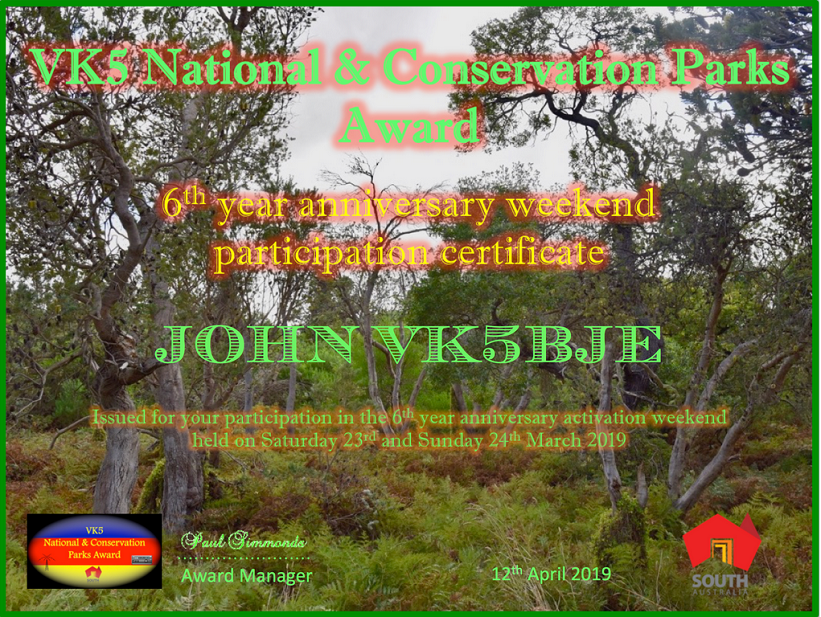
I enjoyed the chance to participate in the 6th anniversary SANCPA by an activation at Kyeema Conservation Park. See my post for March 2019. I will get back to the park soon to try and get the 44 contacts required for wwff. I think Paul’s certificate is great.
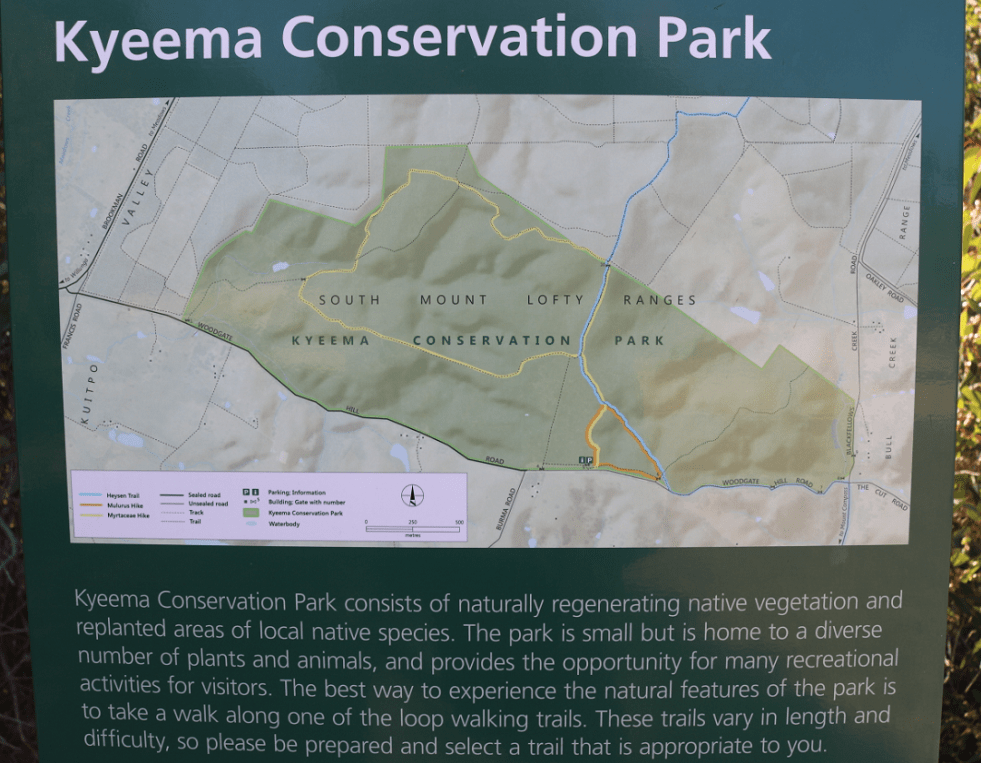
This year I determined I would participate in the sixth anniversary of the South Australian National and Conservation Park (SANCPA) award. I decided I would activate a new Park and chose Kyeema Conservation Park within the Fleurieu Peninsular south of Adelaide. The Park is nearly 41 kilometres from home. It was an easy Sunday drive although there was a bike event underway and lots of road cyclists.
The weather was good, a sunny day with a few clouds, a little humid, although there were puddles on the road suggesting some of the predicted rain showers had come early. It was an ideal day for an activation. However, I had not yet finished with cyclists. Off road bikes are permitted in this park and soon after I had eaten my lunch, a school bus, from a private school, arrived and about 30 young people alighted and retrieved their bikes from a trailer behind the bus. These folk did not disturb me and I am sure they had a good time. There were also bush walkers in the park. I wonder how the shared use of paths would work? Perhaps there was a lot of bell [w]ringing?
The Park
Kyeema Conservation Park is 347 hectares.
The following material is taken from the SA Government web pages for the Park: The area was mined for alluvial gold for several years until it was abandoned in 1890 due to low yield. A few years later some of the area was cleared for pine plantations before being used as a labour prison reserve. This area at the western end of the park, once known as the Kyeema Prison Camp, was established in 1932. The camp was intended for well-behaved prisoners from Yatala, it held around thirteen prisoners and only two guards, with the prisoners were placed on their honour to behave. The Kyeema Prison Camp closed in the mid 1950’s and today there is only a cleared area of land visible to remind us of the Prison Camp’s existence.
The Park has a rich history of bushfires also, being entirely burnt out during the 1983 Ash Wednesday bushfires, and partly affected by subsequent fires in 1994 and 2001. The Friends of Kyeema Conservation Park have worked hard over the years revegetating cleared areas of the park. Due to this history, the area provides a wonderful example of the regeneration capacity of South Australia’s native vegetation following fire, which you can explore as you follow one of the walking trails”.
The Heysen Trail passes through this Park as it makes its way from the coast to the top of the Flinders Ranges.
Kyeema Conservation Park Map
Contacts
I enjoyed 25 qsos before the weather changed. Soon after midday the winds arrived and dust was flying in all directions. I decided I would pack up and head home. While driving home the rain started. It was a shame about the weather because I was prepared to stay late into the afternoon (band practice had been cancelled). Any way I appreciated the contacts and thank all of those who gave me a call, especially Geoff, VK3SQ and Peter, VK3ZPF, who both spotted me on parks and peaks. My phone would not load the parks and peaks website. Perhaps there was not enough signal?
0022 7.150 VK3SQ 59s 55r
0025 VK3UCD 59 58
0028 VK3ZPF 59 57
0031 VK2IR 59 53
0031 VK4TJ 52 310032
0032 VK4/AC8WN 52 31
0033 VK4/VE6XT
00:35 VK3XPT/P 59 59 Perrin was in the Barmah National Park, VKFF-0739 (see photos below)
0041 VK2LEE 59 52
0042 VK3KYO 58 55
0044 VK3ARH/M 57 53
0044 VK3AHR 59 57
0047 VK2HHA 59 57
0050 VK4NH 57 53
0051 VK4DXA 57 53
0052 VK2IO/P 53 53 VKFF-0272
0053 VK1DI/P 59 59
0056 VK3HOT/ 59 56
0058 VK2PKT 58 59
0103 VK3LTL 59 59
0107 VK5NJ 59 58
0127 VK3XV/5 53 51 VKFF-0797
0130 VK3MPR 59 57
0138 7.160 VK3XV/5 59 55
0145 VK3UH 59 41
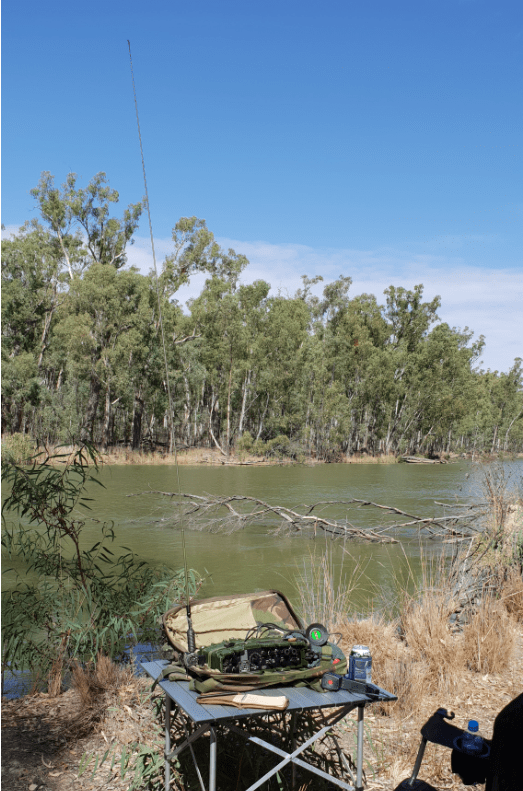
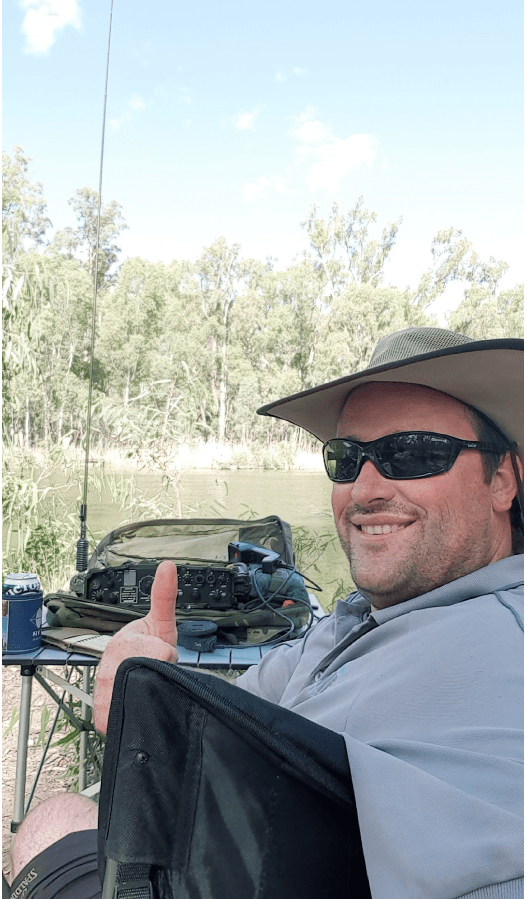
Perrin, VK3XPT, using his UK/RT-320 (PRC-320) Military Manpack and 2.4 metre ‘battle whip’ transmitting 30 watts pep. Perrin was in the Barmah National Park. Thanks Perrin for the photo.
This photo, is from the man himself, Perrin. Perrin and I have had a number of contacts over the years and the one that comes to mind was a qso while he was at Devonport (my home town).
My operating conditions were more standard. I used my FT 857D, set for 20 watts, powered from an 8.4 amp hour LIFEPO4 battery. The antenna was a linked dipole.
I have never been a contester! My station has only ever been a ‘little-pistol’. The closest to a contest that has ever appealed to me were the 144.100 Mhz ‘scrambles’ held in Melbourne, where the aim was to work as many stations as possible on two metres-sideband in a set time-window, usually an hour. I participated in these from my QTH in Greensborough during the late 1970s and early 1980s as VK3BJE. They were held on a Sunday night and were a lot of fun. My IC202, which I still own, was a very little ‘pistol’, putting out three watts pep, and later 10 watts pep when I added the matching amplifier. The other reason for not participating in contests was work. I worked long and often irregular hours through my career. But I also thought I would not be competitive.
However that all changed recently. In August last year I joined AREG, the Amateur Radio Experimenters’ Group. I am possibly their oldest member!
Well over the weekend of 9th and 10th February the 2019 WPX RTTY Contest was held. Grant, VK5GR, knew of my interest in RTTY and invited me to join him at his suburban shack for part of the contest and to participate. Also Theo, VK5IR, was involved as part of the team. Theo and I had different times. I was at Grant’s place on the Saturday night.
Well the preliminary results are out: 33 VK5GR………….608,400 (VK5GR VK5BJE VK5IR)



 vk5bje