Hattah-Kulkyne National Park, 17th April 2014, VKFF – 231

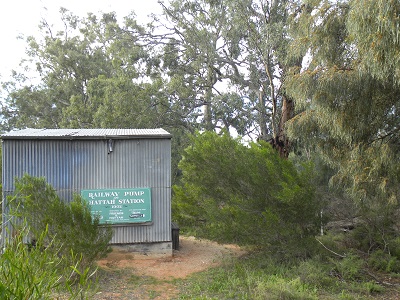
Hattah-Kulkyne National Park: old pump-house

Hattah-Kulkyne National Park: old pump-house

I activated the Hattah-Kulkyne National Park on the 17th April, en route to Narooma in New South Wales, via Ouyen, Shepparton and Corryong. The Park is large: about 50,000 hectares. We took the Hattah Nature Drive which begins at the Lake Hattah Visitor Centre and stopped at the old pump-house which has been restored by volunteers. It provided a great spot for my activation. I used the low-level fence around the car-park to support my squid pole.

The following contacts were made beginning at 06:20 UTC, VK3AMB, Bernard; VK5FAKV, Shawn; VK3FI, Noel; VK5LY, Larry; VK5KGP, Graham; VK5WK, Graham; VK5FEKH, Errol and VK4GJP, Geoff at 06:58. Eight contacts in 40 minutes and then the band went dead! However, there were plenty of nets in action although these don’t work well with QRP stations and I resisted the temptation to join various queues. Well it is a successful activation as far as the Keith Roget Memorial National Parks Award is concerned, but I needed another two contacts to creep over the line and count for the VKFF.

First year anniversary SANPCPA, 5th & 6th April 2014, Scott Creek Conservation Park

The 4th, 5th and 6th of April were set aside to celebrate the first anniversary of the SANPCPA award. It was a week end of exceptional activity especially on the 40 metre band. There were lots of activators, including some for the first time, and many chasers. My first contact was with VK5PAS/P5, Paul, who activated the Cox Scrub Conservation Park. I worked Paul from home. My last contact, from my home station, was on Sunday afternoon at 05:21 with VK5ARG/P5 (Amateur Radio Experimenters Group Inc.) Andrew at Belair National Park, 59 contacts later. These contacts included a number of new parks for me.

On Sunday morning local time, UTC 22:48 5th April 2014, I went back to Scott Creek Conservation Park, which I last activated on the 19th May 2013. I returned to Gate 8 on Mount Bold Road (See map on Friends of Scott Creek web page – link below). My equipment this time was a home made linked dipole for 20 and 40 metres and the Ten Tec Argonaut V1 (model 539).  Power was drawn from a 8.4 amp hour LIfePO4 battery, which was more than adequate for this activation. About one hundred metres inside the park there is a plateau which makes a fine activation spot. I enjoyed 52 contacts, including a number of new Parks and also with VK3PF/P3, Peter, on VK3 VC 001, Mount Matlock.

Here are my contacts: VK5NQP/P5, David at Cromer CP; VK5KET/P5, Andrew at Telford Scrub CP; VK5KC, David; VK5WG, Nev; VK3FQSO, Amanda; VK5GJ, Greg; VK5FMID, Brian; VK5LY/P5, Larry at Lowan CP; VK5PAS/P5, at Deep Creek CP; VK5AV, Tim; VK2AWJ, John; VK5IS, Ian; VK3AMB, Bernard; VK3UBY, Col; VK3CAT, Tony; VK3VIN, Ian; VK4FR/P5, Chris; VK5JP, Peter; VK5KRF/P5, Peter at Winninowie CP; VK5KGP, Graham; VK5KLV/P5, Winninowie CP; VK5DT, Darren;  and VK5FTRG/P5, Tom at Furner CP.  Then after UTC rollover, VK3VTH/P5, Tony at Carpenters Rocks CP; VK5FTRG/P5, Tom at Furner CP; VK5PAS/P5, Paul at Deep Creek CP; VK5ARG/P5, Andy at Horsenell Gully CP; VK5KLV/P5, Les at Winninowie CP; VK3CAT, Tony; VK5VCO/P5. Paul at Clinton CP; VK5KX/P5, Peter; VK5AV, Tom; VK5DJ, John; VK5LY/P5, Larry at Ridley CP; VK5TRM, Rob; VK2UH, Andy; VK5FMID, Brian; VK5NRG, Roy; VK5KET/P5, Andrew at Nene Valley CP; VK5LY/p5, Larry at Ridley CP; VK5NQP/P5, David at Charleston CP; VK5MJP, Patrick; VK5NE, Paul; VK5ZGY/P5, Greg at Naracoorte Caves NP; VK5ZAR/P5, Arno at Black Hill CP; VK3LY/M3, Bill at Yannack; VK3PF/P3, Peter at VK3 VC001, Mt Matlock; VK5MR/P5 Andrew at Tandappa CP; VK5HCF/P5, Col at Hacks Lagoon CP; VK5FTRG/P5, Tom at Reedy Creek CP; VK5PAS/P5, Paul at Eric Bonython CP and VK5STU/P5, Stu at Port Gawler CP.

Thanks to all those amateurs who gave me a call. It is greatly appreciated and I didn’t think Scott Creek Conservation Park would be so popular as the park has been activated three times: twice by me and once by VK5PAS, Paul.

Scott Creek History

Scott Creek History

Marie Steiner’s excellent book, published in 2000,  contains a wealth of research about the various sections of land which were incorporated into  Scott Creek Conservation Park, gazetted in 1985. ‘The Land Acquisition Act, passed in 1969′ (Steiner, 2000, p. 7), provided the basis for the State Government to pursue the long-term water needs of the community by purchasing the private land in the area now included in the Park. Not all of the land was in private hands but clearly the majority. Steiner’s (2000) book traces the challenges and hardships of trying to make a living on rocky, steep and, in places, infertile land.

The land was acquired to extend the catchment for the Mount Bold Reservoir, including the size of the dam. The plan was later modified because of unstable geological features which could lead to failure of a larger water holding.

The Crooked Chimney, Scott Creek CP

The Twisted Chimney, Scott Creek CP

The Twisted Chimney, for example, was on a holding of 17 and a quarter acres, Section 1190.  Steiner (2000, p. 53) sketches the history of the occupation of this section and others.  Such a long history, of 150 years of human occupation and endeavour, is reflected in the challenges of living in the area and the gaps in knowledge. She asks how could such a large parcel of land with this history, come to be created a conservation park (Steiner, 2000, p. 55)? Her answer is that ‘Scott Creek Conservation Park contains some of the most diverse and interesting areas of indigenous vegetation left within the Mount Lofty Ranges’ and that much of it ‘survived the impact of settlement’.

Remains of a tractor

Remains of a tractor

The picture shows the remains of a tractor, ‘discovered’ following a spraying of blackberries by the Friends of Scott Creek Conservation Park. http://www.users.on.net/~dld/Friends%20of%20scott%20creek/Website/

SA Water land (left) and Scott Creek CP (right)

SA Water land (left) and Scott Creek CP (right)

This picture shows the two fire breaks, one each side of the fence, separating the Park from SA Water land.

Mark Oliphant Conservation Park, 10th March 2014

I went back to Mark Oliphant Conservation Park today, 10th March 2014. It was my second activation. My first was on 21 May 2013 (see blog for August 14th 2013). VK5PAS, Paul, encouraged me to become active today, and we did manage a Park to Park contact. Paul was in the Onkaparinga River National Park. I chose a position not far from my first activation spot. I only managed eight contacts. I thought the band was in reasonable condition and I called CQ frequently. My first contact was with VK5PAS/P, Paul at Onkaparinga National Park; VK5EMI, John; VK5KGP, Graham; VK5WG, Nev; VK3BHR, Phil; VK5NWE, Roger; VK5MBD, Bill and VK5EMI, John for a second time.

May be I was a bit tired. Yesterday I attended the first VK5 SOTA & Parks Symposium. This was organised by VK5PAS and the Adelaide Hills Amateur Radio Society Inc. It was a great day. It was my privilege to present two papers: the first was on using Lithium chemistry batteries and the second, on preparing to purchase an ‘Adventure Radio’.  So today I operated using my 8.4 amp hour LIFePO4 battery. I used the battery last night for an hour or so running a five watt FM radio in DStar Hot Spot service and also for today’s activation and the voltage still reads 13.01 volts. I am really happy with this and with a smaller battery, 4.8 amp battery as a back-up and a similar size LiPO and should be able to save my back! I am looking forward to some cooler days and some hiking!

Tasmania, February 2014

We arrived home on Friday 28th February. We had a great time and I wish to thank all of the amateurs with whom I had contacts. Working with five watts is always a challenge and it was magnified, particularly from the southern end of the state and when conditions were poor on the bands. Nevertheless I was able to tally 134 contacts. I activated 11 parks, two of them twice, from different locations, and visited a number of places I had not been before and enjoyed some tourist experiences.

Tasmanian National Parks, minus Macquarie Island, Tasmanian National Parks Service

Tasmanian National Parks, minus Macquarie Island, Tasmanian National Parks Service

Here is my list:

Narawntapu National Park 6th and 7th February, 11 contacts

Rocky Cape National Park, 9th and 10th February, 8 contacts

Cradle Mountain Lake St Clair National Park, 13th February, 10 contacts

Franklin – Gordon Wild Rivers National Park, 13th February, 10 contacts

South West National Park, 14th February 5 contacts

Franklin – Gordon Wild Rivers National Park, second activation, 14th February, 8 contacts

South Bruny National Park, 16th February, 24 contacts

South Bruny National Park, 17th February, second activation, 4 contacts

Tasman National Park, 19th February, 3 contacts

Maria Island National Park, 21st February, 12 contacts

Freycinet National Park, 21st February, 8 contacts

Douglas – Apsley National Park, 22nd February, 13 contacts

Mount William National Park, 12 contacts

All contacts have been transposed into Ham Radio Deluxe and up-loaded to Log Book of the 
World. 

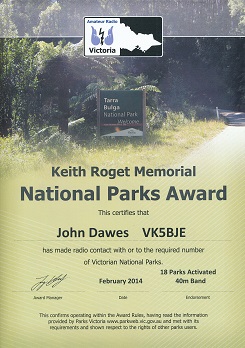
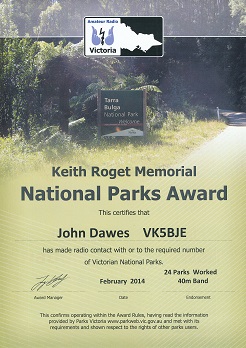
I received a pleasant surprise when I arrived home: I now have the Keith Roget Memorial National Park Award from Amateur Radio Victoria. Eighteen parks activated and 24 parks worked: I still have a long way to go!

Keith Roget Memorial National Parks Award - activator

Keith Roget Memorial National Parks Award – Activator

Keith Roget Memorial National Parks Award - Activator

Keith Roget Memorial National Parks Award – Hunter

Mount William National Park, 23rd February 2104, VKFF – 366

All good things must come to an end! Today was the end of my VK7 National Parks activations. Our holiday is over. We set off from St Helens this morning over gravel roads, in good condition generally, for Mount William National Park. This park is in the north east of the State and includes Eddystone Lighthouse. The Parks brochure suggested that the Park has a great diversity of wildlife, including Tasmania’s only kangaroo species, the Forrester, although the other iconic species, the Tasmanian Devil is now not common due to the facial tumour disease which has been devastating. The Parks authorities suggest ‘that the large population of marsupials has combined with previous farming practices to maintain large areas of open lawn‘. We did not find any of those areas probably because they are away from roads.

We travelled to the day area and boat ramp, but too many people were present and I thought taking over a picnic table, together with my voice, might be too intrusive, so we back-tracked down the road for about four kilometres to a disused gravel pit.

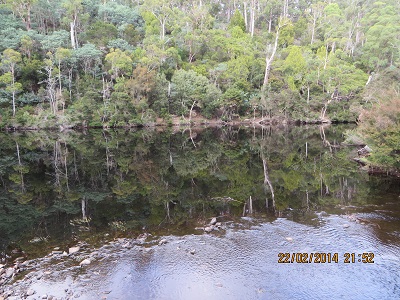
Reflections at a water hole: a river crossing in the Park

Reflections at a water hole: a river crossing in the Park

This became my base. I set up my full QRP station with tripod and squid pole. I was fortunate to make over ten contacts on 40 metres: 23:15, VK5LY/P3, Larry in Chiltern-Mt Pilot National Park; VK2TWR/P2, Rod on VK2 SW 001; VK3FQSO, Amanda; VK3AFW, Ron; VK3PF, Peter; VK5ZLT/P3, Alan; VK2FALL, John; VK3HRA, Allan on VK3 VS 014; VK5PAS, Paul; VK5HCF, Col and VK3ZPF/P3, Peter in the Point Nepean National Park.

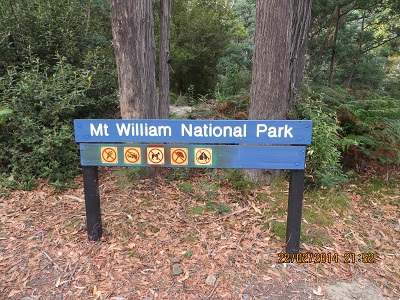
Mount William National Park: note the blue signs

Mount William National Park: note the blue signs

Douglas Apsley National Park, 22nd February 2014, VKFF – 145

I was a bit sceptical about the likely success of an activation extending over the mid-day period with propagation as it is! But I managed 12 contacts and therefore gained sufficient points for the VKFF requirements. My first contact on 7.100 was with VK1RX/P1, Al, on SOTA summit VK1 AC 001; then VK2QR/P2, Rod on SOTA summit VK2 SM 006; VK3PF/P3, Peter on VK3 VT 017 also in the Alpine National Park; VK7FGGT, Greg; VK2IB/P3, Bernard, on SOTA summit VK3 VE 041; VK3ZFP, Peter in the Brisbane Ranges National Park; VK3FLAK, Bob; VK3FQSO, Amanda; VK3APC/P3, on VK3 VC 025; VK3ZPF, Peter; VK3AMB, Bernard and, finally, a great contact with VK2TPM, Peter running 20 watts on 14.210, with a FT897D and a balcony antenna. Taking out the duplicates I finished with 12 contacts and a successful activation for the VKFF award. The VKFF number is VKFF145.

Douglas-Apsley National Park is mid-way up the East Coast of Tasmania. I cannot find a description of how it obtained its name in any of the official literature on the park. But a good explanation is that the hyphenated name is created from the names of the two rivers which flow through the Park: the Douglas and the Apsley. The Park is described as a dry eucalypt forest. I activated from a corner of the car park at the Apsley water hole. When I finished my activation I enjoyed the walk to the water hole: perhaps about 15 minutes. It was occupied by a ‘loud’ family which ensured that any wild-life in the area would probably go somewhere else. The family had a radio, not wireless, with blaring pop music at a high level! I reflected on an experience at Maria Island where my activities attracted the attention of officialdom. A vehicle arrived at my operating position when I was trying a difficult contact. Up went the background noise! One of the staff members asked what I was doing. After providing an explanation of my activities and showing him my log book, and my information sheet, he relaxed a little. However, he suggested that I should have sought out the rangers and gained permission before undertaking my activities. In the mean-time half an hour had elapsed. I wonder if the family at Douglas-Apsley gained permission from the rangers to enable them to ‘take over the water-hole’? In fairness to the Tasmanian Parks staff at Maria Island, seeing me in action was a first! They knew nothing about amateur radio and the Parks programs in Victoria and South Australia. The field is wide open for the Tasmanian amateurs to consider developing a program.

Freycinet National Park, 21st February 2014, VKFF – 188

I visited the Freycinet National Park this morning and set up just inside the Park boundary. We have previously visited this old and iconic Park in the 1970’s and decided we would avoid the crowds and we found a 4 x 4 track and made our way up that for about 300 metres. Despite working pretty hard and changing bands I could only manage seven contacts. However, I was able to snare two SOTA contacts which will take my score to over 500 (small beer you might say).

I will say more about the Park later but at 21:59 I managed  to contact VK2FGTW, Greg, who was activating VK2 HU 093; then VK3MRG, Marshall; VK1RX/P1, Al, SOTA summit VK1 AC 031; VK5PAS, Paul, on 14.140 and then back to 40m: VK5LY/P2, Larry activating a Park in NSW (VKFF 069); VK5PAS, Paul a second time; VK5HCF, Col and finally VK3YSP, Joe making seven contacts.  It was all good fun and great to re-visit this Park.

Maria Island National Park, 21st February 2014, VKFF – 305

We lined up to catch the Maria Island Ferry at 10:00 local on a very windy day. The wind speed was 33 knots and we dreaded the thought of a half hour boat ride. However, facing the front and watching the horizon we survived! Maria Island is a National Park. The Island has had a varied, colourful and, in my view, tragic history, especially as a penal colony.

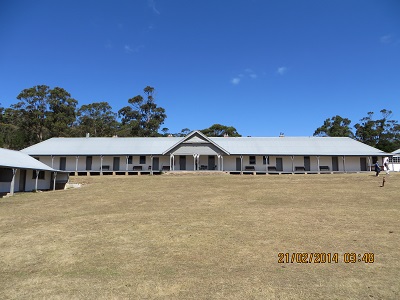
The Penitentiary

The Penitentiary

I spent quite a bit of time chasing ten contacts on 20 metres and later on 40 metres.

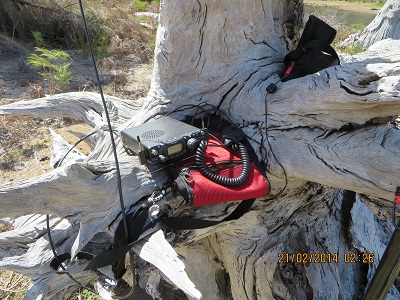
Another stump operating table

Another stump operating table

I called on 14.140 at 00:56 and VK5ZK, Garry, answered. His signal was 5 and 9 and he gave me 5 and 4. Then followed, VK5HS, Ivan; VK5TW, Trevor; VK5EE, Tom; VK5DJ, John; VK5PAS, Paul (thanks Paul for the alerts); VK5HCF, Col and VK5DK, Col. I promised to move to 40 metres and I called quite a few times before VK3FQSO, Amanda, whose signal was 5 and 8 gave me a call and my signal was 3 and 3. Then followed VK3FLAK, Bob; VK2JDS, Dave from near Orange and finally VK1MA, Matt from Canberra. Signals were not so good on 40 metres, but it was early in the afternoon! I saved a little time to take a few photos at Darlington and the penal colony.

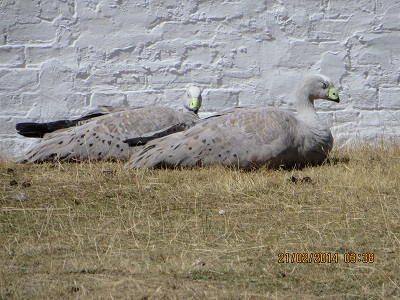
Two Cape Barren Geese enjoying the sun

Two Cape Barren Geese enjoying the sun

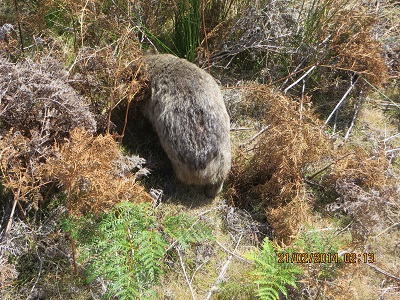
A Wombat; s/he would not turn around for a photo!

A Wombat: s/he would not turn around for a photo!

Maria Island Ferry at Darlington Jetty JCD photo

Maria Island Ferry at Darlington Jetty JCD photo

Tasman National Park, 19th February 2014, VKFF – 481

On the 19th of February we caught the 0930 ferry from Bruny Island to Kettering and then drove to MONA, the Museum of Old and New Art on the northern outskirts of Hobart. We spent more than two hours at the Museum giving us a rushed opportunity to experience the place. It is a stylish building carved into the sandstone banks of the Derwent River and after walking through the building and looking at some of the exhibits and trying to make sense of them I thought of Dante Alighieri’s, The Divine Comedy. Dante describes his descent into hell with the ghost or ‘shade’ of Virgil, then the ascent to Purgatory and finally Heaven. This structure, with Hell, Purgatory and Heaven, with Hell at the bottom could have inspired the architect/s or owners! It is sufficient to say here that the Museum was busy as were the restaurants, car parks and associated attractions: apparently a great winner for Hobart!

Our next destination was the Tasman Peninsula, the Tasman National Park and another visit to the Port Arthur penal settlement. I have been to the Port Arthur Penal settlement previously and it was an interesting tourist experience. This time I took a more critical perspective. I wondered about the making of money from the misery of the convicts with the souvenirs on sale, some of which I consider were in poor taste. I thought of the families separated by the transportation of some of their members to a place on the other side of the world. The long and dangerous sea voyages required, the loss of life, the tenuous hold and fragility of the new settlements and the differing opinions about transportation in Great Britain at the time. I thought of Jeremy Bentham who argued strongly against transportation, the loss, in 1776, of the 13 original colonies in the US, the British foreign policy objectives and the empire and of growing up in Tasmania and the sanitised history taught in schools. I thought of the barbarity of transportation and the expression of concern for the Aboriginal peoples of Australia by the British, but the failure of British and Colonial administrations to adequately govern at the frontiers. We were fortunate to be able to wander around the settlement minus the crowds and I learned some new things. For example, I noticed that there was a facility for aged and infirm prisoners with special reference to senility. This is now a contemporary issue in modern Australian criminal justice. Enough of this as in the morning an activation of Tasman National Park is planned and then we move to Triabunna.

This morning as we looked around the Tasman Peninsula there was a chance for a brief activation from Fortescue Bay. A fairly rough gravel road from the highway travels through about 16 kilometres of thick forest before entering into a small clearing for day use only. For the first six kilometres it is shared with very large trucks carrying gravel.

Tasman National Park - Fortescue Bay

Tasman National Park – Fortescue Bay

I set up my QRP station and tuned to 7.073 hoping to catch the end of the net. I could hear VK5ZK, Garry (21:49) at about 5 and 8, but he could only give me a 4 and 1. I could also hear VK5KGP, Graham, but he could not hear me. At 21.54 I tuned to 20 metres on 14.140. I called and did not get a response. I checked the band at 14.130 and to my surprise I heard VK5ZK, Garry, who was engaged in a regular net with a Canadian amateur. His signal was 5 and 9 and I called in an received 5 and 3 from Garry. I was pleased to work Garry on two bands.

I then called on 14.140 at 22:22 and was answered by VK4ABJ, Jeff from Rockhampton. He was 5 and 9 and he gave me 5 and 7.  We had a great contact to 22:31. It was then time to go.

Bruny Island – South Bruny National Park, 16th February 2014, VKFF – 456

After advising VK5PAS, Paul early last night, by text, that the weather was warm, humid and dry, it rained heavily later in the evening. It started raining as we arrived at our accommodation and it became heavier and heavier and the wind increased. I had told VK6MB, Mike, that I would activate South Bruny National Park on 20 metres in the morning. I sent him an email saying I would renege and I told him the reason why. But I did say that I would activate the Park in the afternoon. You can read more to find out what happened.

My last visit to Bruny Island was in 1960. A mate and I spent a weekend in August at the Island. My memories are not strong, but I do remember the isolation and gravel roads, the lack of places to buy food and the wait for the ferry.

Bruny Island is desirable for IOTA chasers and is registered as OC-233 and the VKFF number is VK456. There is just one National Park and it is in three sections: a small section at Adventure Bay and two sections at the southern end of the Island. I activated the section which also is the location of the Lighthouse at Cape Bruny. I chose Jetty Beach at the day visiting centre and campground looking out over Great Taylors Bay. This area is called Labillardiere Peninsula.

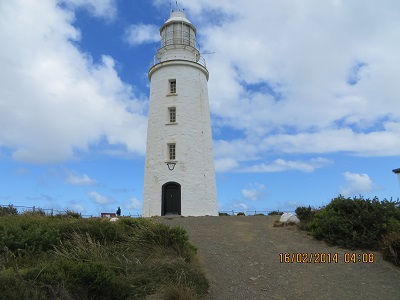
Cape Bruny Lighthouse

Cape Bruny Lighthouse

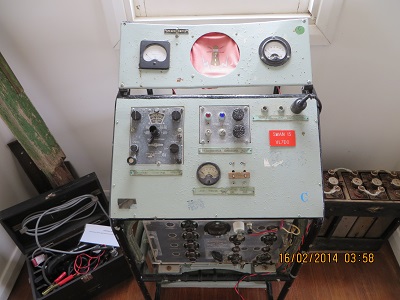
HF transceiver from Swan Island

HF transceiver from Swan Island

The transceiver is in the museum next to the lighthouse keepers’ residences (which are now available for hire). The call sign was VL7DO and the transceiver is on loan to the museum. It looks in pretty poor condition. The transceiver was last used on Swan Island, a small island just off the North East corner of Tasmania. The Cape Bruny lighthouse is also redundant. It was replaced by a  solar powered light located about 400 metres away. The following notes are from the Parks and Wildlife Service. ‘Following a series of mishaps and shipwrecks south of Bruny Island, including the catastrophic wreck of the convict ship, George 111, in 1835 the (Colonial) Governor George Arthur agreed to erect a lighthouse to guide ships past Bruny Island. When first lit in March 1838, Cape Bruny was Tasmania’s third lighthouse and Australia’s fourth. …Technological advances in the 1980’s and 1990’s permanently altered the operation of Australia’s lighthouses. When Cape Bruny was lit for the last time on 6 August 1996 and replaced by a solar powered light nearby one of Australia’s last remaining staffed light towers was decommissioned. Along with most other Tasmanian light stations Cape Bruny was transferred from the Commonwealth Government to the State Government (on) 1 May 1998. In December 2000 it was added to the South Bruny National Park.’ The map copies we used did not show the transfer of land back to the State.

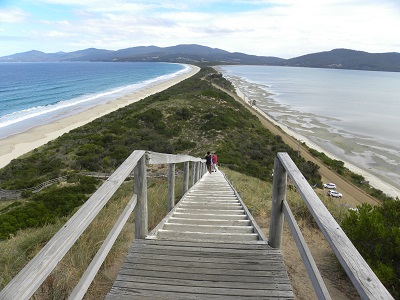
Looking South - Bruny Island Isthmus JCD photo

Looking South – Bruny Island Isthmus JCD photo

And now back to amateur radio. I tried 20 metres at 04:44. The band was quiet. I called on 14.140 MHz. I decided I would try 40 metres and at 04:56, after checking the frequency, called on 7.100. I was immediately answered by VK3MNZ, Don; then followed: VK3MRG, Marshall; VK3AFW, Ron; VK3PF, Peter; VK5CZ, Ian trying out a new antenna: VK5PAS, Paul; VK3FQSO, Amanda; VK5PAS, Paul advising me that the Mount Gambier crew would call me; VK3XD, John; VK5FCDL, Col; VK3MCX, Max; VK3HJ, Luke; VK3VCE, Dave; VK5HCF, Col; VK5KC, David;  VK5CZ, Ian, now slightly stronger and VK5EE, Tom. VK5PAS, Paul advised me the VK6MB, Mike was waiting for me to move to 20 metres.

I indicated I would QSY to 14.140 MHz + / – I called on 14.145 MHz and was answered by VK5PAS, Paul. His signal was 5 and 9 and so was mine. Then followed VK6MB, Mike.  Signals were 5 and 8 each way. Once again I was delighted to get Mike in the log. More followed: VK5WG, Nev; VK5CZ, Ian; Bruce, ZL1BWG with whom I had a 12 minute qso; VK5NIG, Nigel and finally, VK5KC, David. A total of 24 contacts in just under an hour and three quarters made for a fun afternoon. Thanks to all of those who gave me a call and now have Bruny Island and the National Park in their logs.

On 17th February I activated the Park for a second time. We drove to Cloudy Bay Beach and I found a spot away from the car park and joined the 7073 morning net from South Australia. Only four contacts were had, but at 21:29, the band appeared in good condition. Brian, VK5BC/P5 at Corney Point answered my CQ. He was 5 and 7 and he gave me a 5 and 5. Then followed VK5ZK, Garry and then VK5ADL, David. It was a pity there were only four of us on the net with such good conditions. My final contact was with VK5IS, Ian, at 22:03 on 7.110.

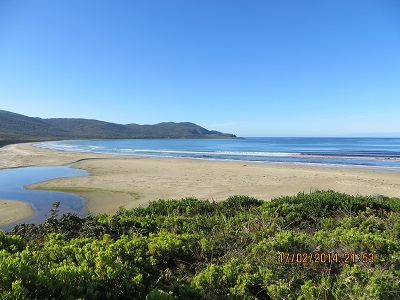
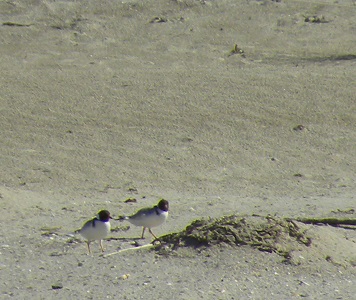
Cloudy Bay Beach is a magnificent, wide and sandy beach and we went for a one hour walk bird spotting. There were the usual assortment of sea birds: Silver Gulls, Pacific Gulls, with possibly juveniles present, Forest Ravens and plenty of Masked Lapwings. Of course Forest Ravens are not sea birds, but they were on rocks in the sea. We tried to work out what attracted them: possibly small birds or scaring sea birds into giving up their catch! There were a few Sooty Albatrosses, but the highlight for Jenny was seeing some Hooded Plovers. These small birds nest and camp in bits of sea weed on the sand: but they are hard to see when they are still. We have been involved in counting them, as a measure of conservation, on beaches south of Corney Point on the Yorke Peninsula in SA. At Cloudy Bay Beach a section of the beach was roped off to keep vehicles out of the area frequented by the Hooded Plover. If that roped area wasn’t present, they would simply be run over!

Cloudy Bay Beach - South Bruny National Park

Cloudy Bay Beach – South Bruny National Park

Hooded Plovers on Cloudy Bay Beach; photo JCD

Hooded Plovers on Cloudy Bay Beach; photo JCD

.